춤추는 원반
시간 제한3초메모리 제한512 MB
6x6 막대 격자의 왼쪽 위 막대에 쌓인 n개의 원판을 오른쪽 아래 막대로 옮깁니다. 스택 단위로 아래나 오른쪽 막대로만 옮기며, 그 과정을 출력합니다.
문제
루카는 하노이의 탑 퍼즐을 완전히 익혔고, 원반과 막대를 쓰는 비슷한 게임을 직접 만들었다. 이 퍼즐에는 크기가 서로 다른 나무 원반이 개 있고, 막대는 36개 있다. 원반에는 작은 것부터 순서대로 1부터 까지 번호가 붙어 있다. 막대는 위에서 아래로 1번부터 6번까지 6개의 행, 왼쪽에서 오른쪽으로 1번부터 6번까지 6개의 열에 배치되어 있다.
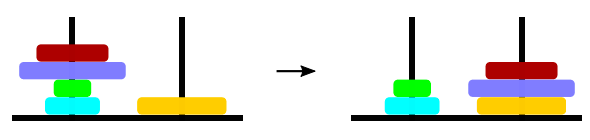
처음에는 개의 원반이 모두 왼쪽 위 막대에 임의의 순서로 쌓여 있다. 한 단계에서 플레이어는 한 막대 의 맨 위에서 원반 한 개 이상으로 이루어진 묶음을 집어, 순서를 바꾸지 않고 바로 아래 또는 바로 오른쪽 막대의 맨 위로 옮길 수 있다. 목표는 모든 원반을 오른쪽 아래 막대에 올려, 위에서 아래로 크기가 커지는 순서로 정렬하는 것이다.
왼쪽 위 막대에 있는 원반의 초기 순서가 주어졌을 때, 퍼즐을 푸는 유효한 단계의 순서를 하나 찾으시오. 해가 항상 존재한다고 가정해도 된다.
입력
첫 줄에 원반의 개수 이 주어진다(). 다음 줄에는 서로 다른 정수 ()이 주어진다. 왼쪽 위 막대에 있는 원반의 초기 순서이며, 아래에서 위 방향이다.
출력
단계의 수를 이라 할 때, 개의 줄을 출력하시오. 번째 줄에는 네 개의 값 , , , 를 출력한다.
- 와 는 원반을 집어 올리는 막대의 행과 열이며, 각각 1 이상 6 이하의 정수이다.
- 는 대문자 "D" 또는 "R"이다. "D"는 원반을 바로 아래 막대로, "R"은 바로 오른쪽 막대로 옮긴다는 뜻이다.
- 는 이 단계에서 옮기는 원반의 개수인 양의 정수이다.
모든 단계는 위 규칙에 맞아야 하며, 단계들이 퍼즐을 올바르게 풀어야 한다.
힌트
예시 그림에서 처음 9단계는 원반을 순서를 바꾸지 않고 모두 6행 5열의 막대로 옮긴다. 이 막대는 오른쪽 아래 목표 막대의 바로 왼쪽에 있다. 다음 단계에서는 맨 위의 원반 5개, 즉 아래에서 위로 (6, 5, 4, 3, 2)인 원반을 목표 막대로 옮긴다. 마지막으로 원반 1을 목표 막대로 옮겨 아래에서 위로 (6, 5, 4, 3, 2, 1)의 순서를 얻는다.