Sanic
시간 제한1초메모리 제한1024 MB
산닉의 반지름이 1일 때, 반지름 r인 루프 안쪽을 한 바퀴 도는 동안 산닉이 몇 바퀴 회전하는지 계산한다.
문제
Sanic Hegehog은 빠르게 달리는 것을 좋아한다. Sanic은 달리기도 하지만, 몸을 둥글게 말아 루프를 따라 아주 빠르게 굴러 내려가는 것을 특히 좋아한다. Sanic은 루프를 도는 동안 자신이 몇 바퀴 회전했는지 세려고 하지만 매번 실패한다. 너무 빠르게 회전하다 보니 어지럽고 정신이 없기 때문이다. Sanic의 충실한 조수인 당신이 세는 것을 도와주려 하지만 그것도 소용없다. Sanic이 루프를 그렇게 빠르게 돌면 당신 눈에는 파란 잔상만 보일 뿐이다. 대신 회전 수를 계산하는 프로그램을 작성하면 어떨까?
문제를 단순하게 만들기 위해 세상의 길이는 Sanic의 반지름 단위로 측정한다. 루프를 도는 동안 Sanic은 반지름이 인 원으로 정확히 모델링할 수 있다. 또한 Sanic이 도는 루프의 안쪽은 반지름이 인 원으로 모델링할 수 있다(Sanic의 반지름 단위). 은 항상 이상인데, Sanic은 그보다 작은 루프를 돌려고 시도하지 않기 때문이다. Sanic은 시계 방향으로 회전하고, 루프를 따라 반시계 방향으로 움직인다. 그림에 나와 있다.
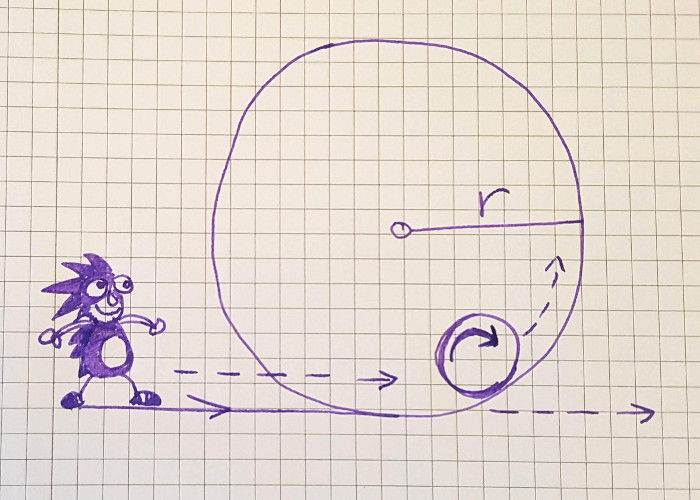
루프를 통과하는 Sanic의 움직임을 나타낸 그림. 작은 원은 Sanic(반지름 ), 큰 원은 루프(반지름 )를 나타낸다.
Sanic이 루프를 정확히 한 바퀴 도는 동안 회전하는 횟수 를 계산해야 한다. Sanic은 미끄러지지 않으며, 항상 루프 안쪽에 완벽하게 접촉한다. 루프는 단단하고 전혀 움직이지 않는다. 빠르게 달려서 답을 빠르게 계산하는 것을 잊지 말자!
입력
입력은 한 줄로 주어지며, 소수 하나가 들어 있다. 은 Sanic의 반지름에 대한 루프의 반지름이다. 은 소수점 아래 두 자리까지 정확히 주어지며 을 만족한다.
출력
위에서 정의한 를 출력한다. 상대 오차 또는 절대 오차가 이하여야 한다.