Gwen의 선물
시간 제한1초메모리 제한512 MB
각 값이 1 이상 n-1 이하인 길이 n-1 수열 가운데, 어떤 연속 부분 구간의 합도 n의 배수가 되지 않는 수열을 사전순으로 나열했을 때 k번째 수열을 구한다.
문제
Gwen은 대부분의 수를 좋아한다. 사실 그녀는 의 배수가 아닌 모든 수를 좋아한다(이라는 수 자체는 정말 싫어한다). 올해 친구들의 생일을 맞아 Gwen은 친구마다 송이의 꽃으로 이루어진 수열을 그려 주기로 했다. 각 꽃은 개 이상 개 이하의 꽃잎을 가진다(양 끝 포함). 의 배수를 싫어하기 때문에, 꽃들의 비어 있지 않은 연속한 부분수열의 꽃잎 총합은 의 배수가 될 수 없다. 예를 들어 일 때 위의 두 그림은 조건을 만족하지만, 아래 그림은 두 번째, 세 번째, 네 번째 꽃의 꽃잎 합이 이므로 조건을 만족하지 않는다. (위의 두 그림은 각각 예제 입력 과 이다.)
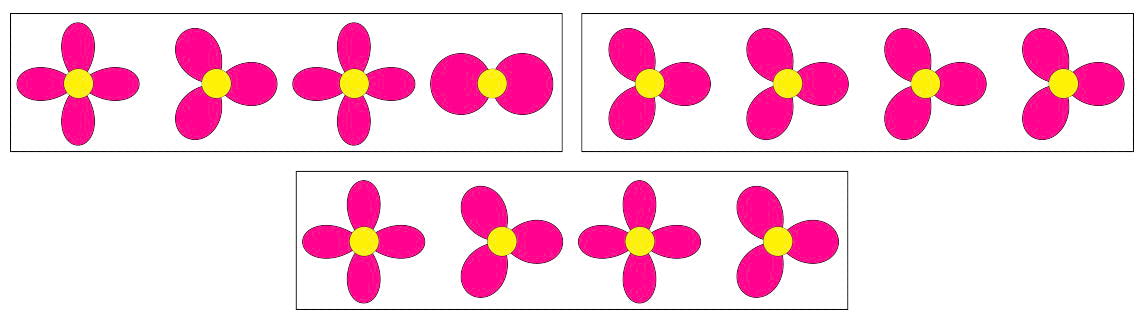
Gwen은 그림들이 서로 다르기를 바라므로, 두 그림이 같은 꽃 수열을 가질 일은 없다. 이를 기록하기 위해 Gwen은 각 그림을 왼쪽부터 오른쪽으로 각 꽃의 꽃잎 수를 나열한 개의 수의 수열로 적었다. 그녀는 조건을 만족하는 길이 의 모든 수열을 사전순으로 적어 두었다. 수열 이 보다 사전순으로 앞선다는 것은, 인 모든 에 대해 이면서 인 인덱스 가 존재한다는 뜻이다.
Gwen의 목록에서 번째 수열은 무엇인가?
입력
입력은 한 줄로 이루어지며, Gwen이 싫어하는 수 ()과, 조건을 만족하는 모든 수열을 사전순으로 나열했을 때 찾고자 하는 수열의 번호 ()가 주어진다. 이 에 대해 조건을 만족하는 수열이 적어도 개 존재함이 보장된다.
출력
Gwen의 목록에서 번째 수열을 출력한다.