나무에 가려진 숲
시간 제한1초메모리 제한512 MB
양의 정수 격자에서 벨의 위치와 잘려 나간 나무들의 축 정렬 직사각형이 주어질 때, 원점에서 벨을 잇는 선분을 가리는 남은 격자점이 있는지 판정하고 가장 가까운 가림점을 출력한다.
문제
Belle과 함께 숲에서 숨바꼭질을 하고 있다. 숲에는 양의 정수 격자점마다 나무가 하나씩 있다. 즉, 와 가 모두 양의 정수인 모든 점 에 나무가 있다. 각 나무는 점으로 생각해도 된다. 벌목 회사가 어떤 축에 평행한 직사각형 안의 모든 나무를 잘라 냈는데, 직사각형의 경계에 있는 나무도 포함해서 잘라 냈다.
너는 에 서 있고 Belle은 에 서 있다. Belle을 향한 시선을 가리는 나무가 하나도 없을 때, 그리고 그때만 Belle을 볼 수 있다. 에 나무가 있다면 Belle은 네 위치를 향한 나무의 옆면에 서서 너를 돕는다.
예를 들어 Belle이 에 서 있다고 하자. 과 를 꼭짓점으로 하는 직사각형 안의 나무를 잘라 냈다면(그림의 파란 직사각형) Belle을 볼 수 있다. 그러나 직사각형이 와 에 있었다면(그림의 빨간 직사각형) 에 있는 나무가 시야를 가린다.
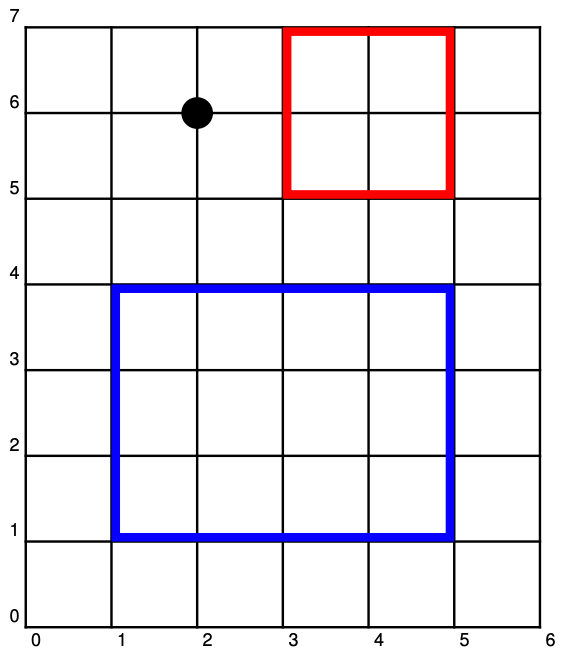
직사각형과 Belle의 위치가 주어질 때, Belle을 볼 수 있는지 판별하라.
입력
첫 번째 줄에는 Belle이 서 있는 좌표인 두 정수 와 가 주어진다().
두 번째 줄에는 직사각형의 서로 반대쪽 두 꼭짓점 과 를 나타내는 네 정수 , , , 가 주어진다(, ).
출력
Belle을 볼 수 있으면 Yes를 출력한다.
그렇지 않으면 No와 함께 시야를 가리는 가장 가까운 나무의 좌표를 출력한다.