로봇 팔
시간 제한5초메모리 제한128 MB
직사각형 벽으로 이루어진 공장 다각형과 로봇 고정축 후보 5개가 주어질 때, 수직·수평 두 마디로 꺾이는 로봇 팔이 다각형을 벗어나지 않고 내부의 모든 점에 닿을 수 있는지 각각 판단합니다.
문제
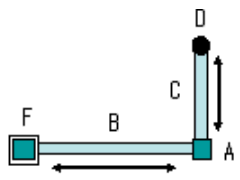
공장에서 작업하는 로봇은 고정축 F, 관절 A, 두 개의 곧은 팔 B와 C, 그리고 손 D로 이루어져 있다. 팔 B는 F와 A를 연결하고, 팔 C는 A와 D를 연결한다.
팔 B는 F에서 왼쪽 또는 오른쪽 수평 방향으로 뻗거나, 위쪽 또는 아래쪽 수직 방향으로 뻗을 수 있다. 팔 C는 A에서 팔 B와 항상 수직인 방향으로 뻗는다. 두 팔의 길이는 각각 0 이상으로 자유롭게 조절할 수 있다.
공장 바닥은 수평 벽과 수직 벽이 번갈아 이어진 하나의 단순 다각형으로 표현된다. 따라서 다각형 내부에는 별도의 벽이 없다.
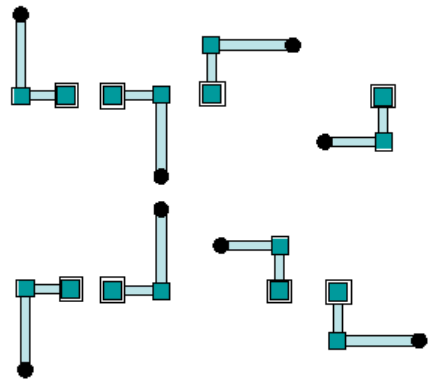
F의 위치에 따라서는 두 팔의 길이와 관절 위치를 어떻게 조절해도 손 D가 닿을 수 없는 공장 내부 지점이 있을 수 있다.
공장의 경계를 나타내는 다각형과 5개의 고정축 후보 위치가 주어진다. 각 후보 위치에 대해 로봇 손이 공장 내부의 모든 지점에 도달할 수 있는지 판정하라. 고정축은 항상 공장 내부에 있다. 공장 내부는 경계선을 포함하지 않지만, 팔은 경계선을 따라 움직일 수 있다. 고정축, 관절, 손은 점이고, 팔은 두께가 없는 선분이라고 가정한다.
입력
첫째 줄에 공장 경계를 나타내는 다각형의 꼭짓점 수 N이 주어진다. 4 <= N <= 20000이다.
다음 N개의 줄에는 다각형 꼭짓점의 좌표 X, Y가 한 줄에 하나씩 주어진다. 꼭짓점은 경계를 따라 반시계방향 순서로 주어진다. 모든 좌표는 0 이상 1000000 이하의 정수이다.
이어서 5개의 줄에는 고정축 후보 위치의 좌표 X, Y가 한 줄에 하나씩 주어진다.
출력
입력으로 주어진 5개 고정축 후보에 대해, 입력 순서대로 한 줄에 하나씩 출력한다. 해당 위치에서 로봇 손이 공장 내부의 모든 지점에 도달할 수 있으면 YES, 그렇지 않으면 NO를 출력한다.
힌트
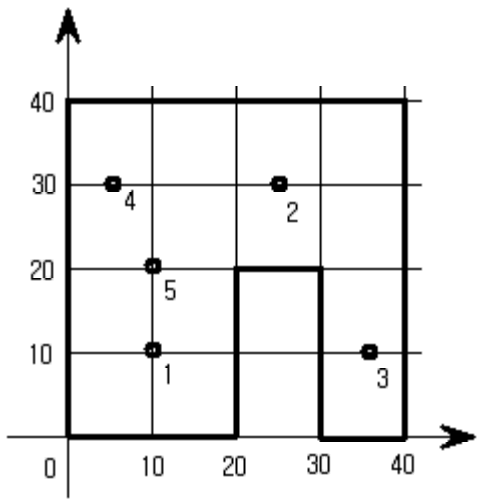
그림은 공장의 모양과 여러 고정축 위치의 예를 보여 준다.