화물 열차
시간 제한2초메모리 제한128 MB
구간들의 합집합으로 주어진 두 화물열차에서 겹치는 화물칸 수가 최대가 되는 최소 이동 칸수를 구하는 문제입니다.
문제
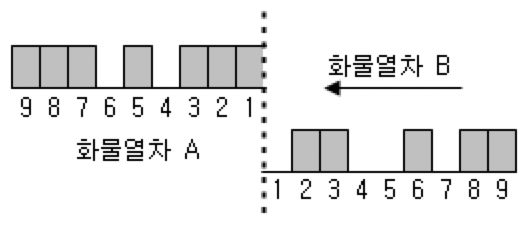
두 화물 열차가 이웃한 레일 위에 놓여 있다. 각 칸에는 컨테이너가 있을 수도 있고 없을 수도 있다. 열차 A는 고정되어 있고, 열차 B만 앞으로 움직일 수 있다. 컨테이너가 있는 칸끼리 겹치는 수가 최대가 되도록 열차 B를 움직이려고 한다.
처음에는 두 열차의 첫 번째 칸 앞부분이 서로 마주 보며 같은 선 위에 있다. 열차 B를 앞으로 k칸 움직이면, 열차 A의 i번 칸과 열차 B의 j번 칸은 i + j - 1 = k일 때 같은 위치에 놓인다. 컨테이너가 놓인 칸끼리 최대한 많이 겹치게 하려면 열차 B를 몇 칸 앞으로 움직여야 하는지 구하시오.
입력
첫째 줄에 열차 A에서 컨테이너가 연속해서 놓인 구간의 수 N이 주어진다. 다음 N개의 줄에는 Xi와 Yi가 공백으로 구분되어 주어진다. 이는 열차 A의 Xi번 칸부터 Yi번 칸까지 컨테이너가 놓여 있음을 뜻한다.
그 다음 줄에 열차 B에서 컨테이너가 연속해서 놓인 구간의 수 M이 주어진다. 다음 M개의 줄에는 Zi와 Wi가 공백으로 구분되어 주어진다. 이는 열차 B의 Zi번 칸부터 Wi번 칸까지 컨테이너가 놓여 있음을 뜻한다.
N과 M은 1 이상 1,000 이하의 자연수이다. 모든 칸 번호는 1 이상 10^9 이하의 자연수이며, 각 구간의 시작 번호는 끝 번호보다 크지 않다.
출력
컨테이너가 놓인 칸끼리 겹치는 수가 최대가 되도록 열차 B를 앞으로 움직일 칸 수를 출력한다. 가능한 칸 수가 여러 개라면 그중 가장 작은 값을 출력한다.