원숭이 매달기
시간 제한1초메모리 제한128 MB
괄호로 표현된 이진 나무 구조를 파싱해서 모든 분기가 양쪽 동일한 수의 원숭이를 갖도록 하는 최소 원숭이 수를 구합니다.
문제
깊은 정글의 거대한 나무 꼭대기에는 원숭이들이 좋아하는 무화과가 열린다. 원숭이들은 꼭대기까지 올라가기 위해 부서지기 쉬운 덩굴을 조심해서 타야 한다.
어떤 덩굴은 두 갈래로 나뉘며, 시소처럼 균형을 이룬다. 두 갈래에 매달린 원숭이 수가 서로 다르면 덩굴이 끊어져 원숭이들이 떨어진다. 원숭이들은 서로 협력해서 모든 분기의 균형을 맞출 수 있다.
덩굴 구조는 대괄호로 나타낸다. 빈 문자열은 분기가 없는 덩굴을 뜻하며, 이 경우 원숭이 한 마리가 필요하다. 대괄호 한 쌍 [...]은 하나의 분기점을 뜻한다. 괄호 안에는 두 하위 덩굴이 차례로 쓰이며, 어느 한쪽 하위 덩굴이 비어 있을 수 있다. 각 분기점에서는 두 하위 덩굴에 같은 수의 원숭이를 보내야 한다. 한 하위 덩굴이 자체적으로 필요한 최소 수보다 더 많은 원숭이를 받아도, 다른 하위 덩굴과 균형을 맞출 수 있다면 괜찮다.
덩굴의 깊이는 25를 넘지 않는다.
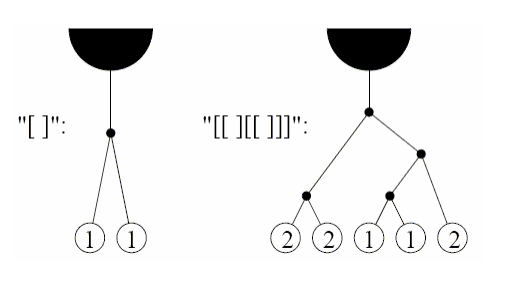
각 덩굴에 대해, 모든 분기의 균형을 유지하면서 나무 꼭대기에 도달할 수 있는 최소 원숭이 수를 구하라.
입력
첫째 줄에 테스트 케이스의 개수 N (1 <= N <= 1000)이 주어진다.
각 테스트 케이스는 한 줄로 주어지며, 덩굴 구조를 대괄호로 표현한 문자열이다. 문자열의 길이는 0 이상 150 미만이다. 빈 테스트 케이스는 빈 줄로 주어진다.
출력
각 테스트 케이스마다 덩굴의 균형을 유지하면서 나무 꼭대기에 도달할 수 있는 최소 원숭이 수를 출력한다.
힌트
빈 덩굴은 분기가 없으므로 정답은 1이다.