개똥벌레
시간 제한1초메모리 제한128 MB
동굴에서 번갈아 나오는 종유석과 석순의 길이가 주어질 때, 파괴하는 장애물 수가 최소가 되는 비행 구간의 개수와 그 최소값을 구하는 문제입니다.
문제
개똥벌레 한 마리가 석순과 종유석으로 가득한 동굴에 들어갔다. 동굴의 길이는 N미터, 높이는 H미터이다. N은 항상 짝수이다. 첫 번째 장애물은 바닥에서 올라오는 석순이고, 이후에는 천장에서 내려오는 종유석과 석순이 번갈아 나온다.
동굴의 높이는 아래에서부터 1번부터 H번까지의 수평 비행 구간으로 나눈다. 길이가 x인 석순은 1번부터 x번 구간을 막고, 길이가 x인 종유석은 H - x + 1번부터 H번 구간을 막는다.
다음 그림은 길이가 14미터이고 높이가 5미터인 동굴이다.
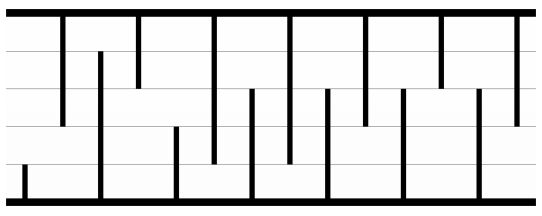
개똥벌레는 장애물을 피하지 않는다. 비행할 구간 하나를 정한 뒤, 그 구간을 따라 일직선으로 날아가면서 만나는 모든 장애물을 파괴한다.
위 그림에서 4번 구간으로 날아가면 파괴해야 하는 장애물은 모두 8개이다.
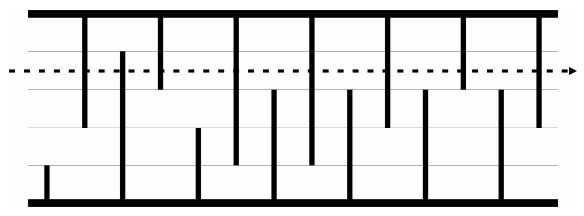
하지만 1번 구간이나 5번 구간으로 날아가면 파괴해야 하는 장애물은 7개뿐이다.
동굴의 크기와 모든 장애물의 길이가 주어질 때, 개똥벌레가 파괴해야 하는 장애물 수의 최솟값과 그 최솟값을 만드는 구간의 개수를 구하시오.
입력
첫째 줄에 N과 H가 주어진다. N은 항상 짝수이다. (2 <= N <= 200,000, 2 <= H <= 500,000)
다음 N개 줄에는 장애물의 길이가 동굴 입구에서 출구 방향 순서대로 주어진다. 첫 번째 장애물은 석순이며, 이후에는 종유석과 석순이 번갈아 나온다. 각 장애물의 길이는 H보다 작은 양의 정수이다.
출력
첫째 줄에 개똥벌레가 파괴해야 하는 장애물 수의 최솟값과 그 최솟값을 만드는 구간의 개수를 공백으로 구분하여 출력한다.