시에르핀스키 삼각형
시간 제한1초메모리 제한128 MB
시에르핀스키 삼각형에서 이름으로 주어진 부분 삼각형이 어떤 삼각형들에 기대어 있는지 모두 출력합니다.
문제
Wacław Sierpiński는 폴란드의 수학자이다. 그는 다음 과정을 반복해 삼각형들을 만든다.
- 정삼각형
T를 그린다. - 각 변의 중점을 서로 연결하여 네 개의 작은 정삼각형
T1,T2,T3,T4로 나눈다. 아래 그림의 왼쪽이 이 단계이다. - 같은 과정을
T1,T2,T3에 반복한다. 새로 생기는 삼각형의 이름은T11,T12,T13,T14,T21,T22,T23,T24,T31,T32,T33,T34가 된다. - 이름이
1,2,3으로 끝나는 모든 삼각형에 이 과정을 계속 반복한다. 이렇게 얻는 프랙탈을 시에르핀스키 삼각형이라고 한다.
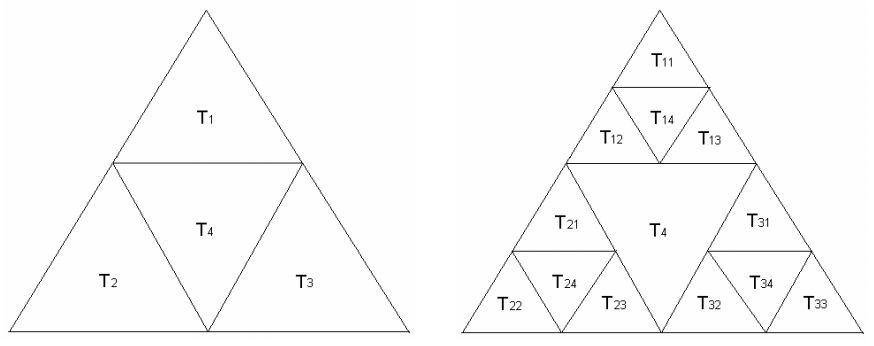
삼각형 B가 삼각형 A를 포함하지 않으면서, A의 한 변 전체가 B의 한 변의 일부이면 A가 B에 기대고 있다고 한다. 예를 들어 T23은 T24와 T4에 기대지만, T2와 T32에는 기대지 않는다. A가 B에 기대고 있다고 해서 B도 A에 기대는 것은 아니다.
시에르핀스키 삼각형에 속한 삼각형 A가 주어진다. A가 기대고 있는 모든 삼각형 B를 구하라.
입력
첫째 줄에 삼각형 A의 이름이 주어진다. 이름의 길이는 2 이상 50 이하이다.
출력
삼각형 A가 기대고 있는 모든 삼각형의 이름을 한 줄에 하나씩 출력한다. 출력 순서는 상관없다.