ABCD
시간 제한1초메모리 제한128 MB
네 개의 평행한 레일 A, B, C, D 사이 거리가 주어질 때 각 레일 위 점들이 직사각형을 이룰 수 있는지 판단하고 가능한 최소 면적을 구합니다.
문제
정찰 부대가 새로운 보고를 보내왔다. 네 개의 무한히 길고 서로 평행한 레일 A, B, C, D 위에 각각 하나씩 놓인 병기 ABCD가 테러리스트의 손에 넘어갔다.
ABCD의 부품을 하나라도 파괴하거나 레일에서 꺼내면 즉시 작동해 큰 재앙이 일어난다. 다행히 각 부품은 매우 가벼워 레일 위에서 자유롭게 움직일 수 있다.
ABCD가 작동하려는 순간 네 부품이 정확히 직사각형의 네 꼭짓점을 이루고 있으면, ABCD는 스스로 기능을 잃고 자폭한다. 자폭할 때 발생하는 방사능의 양은 그 직사각형의 넓이에 비례한다.
레일 사이의 거리가 주어졌을 때, ABCD를 자폭시킬 수 있는지 판단하고, 가능하다면 만들 수 있는 직사각형의 최소 넓이를 구하라.
입력
첫 번째 줄에 양의 실수 p, q, r이 공백으로 구분되어 주어진다. 세 값은 모두 10000 이하이다.
p, q, r은 각각 레일 A와 B, B와 C, C와 D 사이의 거리이다. 각 값은 소수점 아래 최대 두 자리까지 주어진다.
출력
ABCD를 자폭시킬 수 없다면 0을 출력한다.
자폭시킬 수 있다면, 자폭할 때 네 부품이 이루는 직사각형의 최소 넓이를 소수점 아래 넷째 자리까지 출력한다.
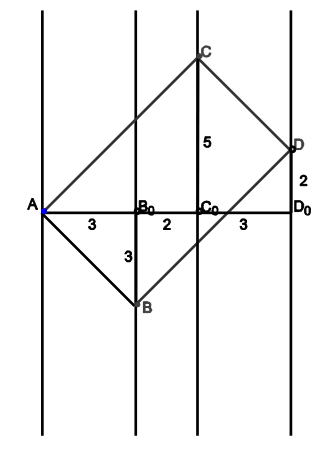
힌트