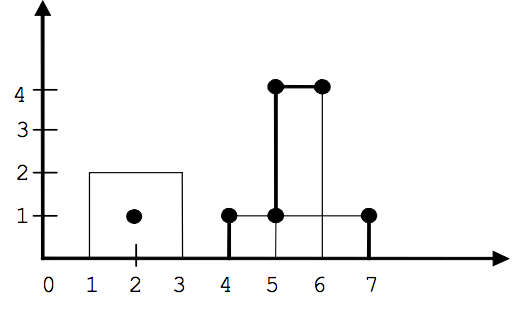
사진
시간 제한1초메모리 제한128 MB
x축에 밑변을 둔 넓이 A의 사각형들로 모든 별을 덮는 데 필요한 최소 사진 수를 구하는 문제입니다.
문제
밤하늘의 별을 사진에 담는 것을 좋아하는 지용이가 하늘에 떠 있는 별 N개를 모두 찍으려고 합니다.
지용이의 카메라는 가로세로 비율에 상관없이 항상 넓이가 정확히 A인 직사각형 사진을 찍을 수 있습니다. 편집을 쉽게 하기 위해 사진의 네 변은 좌표축과 평행해야 하고, 직사각형의 아랫변은 반드시 x축(직선 y = 0) 위에 놓여 있어야 합니다.
각 별은 정수 좌표 (x, y)로 주어집니다. 한 장의 사진은 자신의 직사각형 영역(경계 포함) 안에 들어오는 모든 별을 담습니다. 사진의 넓이는 항상 A이지만, 가로 길이와 세로 길이는 둘의 곱이 A가 되도록 자유롭게 정할 수 있습니다.
주어진 모든 별을 담기 위해 필요한 사진의 최소 개수를 구하세요.
입력
첫째 줄에 별의 개수 N과 사진 한 장의 넓이 A가 공백으로 구분되어 주어집니다. A는 정수입니다. (1 ≤ N ≤ 100, 1 ≤ A ≤ 200,000)
다음 N개의 줄에 각 별의 좌표 x와 y가 정수로 주어집니다. 서로 다른 두 별이 같은 좌표를 가지는 경우는 없습니다. (0 ≤ x ≤ 3,000,000, 1 ≤ y ≤ A)
출력
모든 별을 담기 위해 필요한 사진의 최소 개수를 한 줄에 출력합니다.
힌트