울타리 세우기
시간 제한1초메모리 제한128 MB
다른 건물들의 금지 사각형 내부를 피하면서 저택의 사각형을 둘러싸는 축에 평행한 최소 길이의 울타리를 구하는 문제입니다.
문제
레오폴트는 복권에 당첨되어 넓은 사유지를 얻었다. 앞으로 살게 될 본관 저택 외에도, 사유지에는 여러 건물이 있다. 부지에는 울타리가 없어서 레오폴트는 무단 침입을 막기 위해 울타리를 세우려 한다. 비용을 아끼기 위해, 울타리는 본관 저택만 둘러싸면 충분하다. 다만 한 가지 중요한 제약이 있다. 울타리는 어떤 건물에도 너무 가까이 있어서는 안 된다. 위에서 내려다보면 각 건물은 하나의 금지 직사각형 안에 들어 있으며, 울타리의 어떤 부분도 금지 직사각형의 내부에 놓일 수 없다. 모든 직사각형의 변은 x축과 y축에 평행하며, 울타리의 모든 부분도 x축 또는 y축에 평행해야 한다.
본관 저택을 둘러싸는, 규칙을 지키는 울타리의 최소 길이를 구하여라.
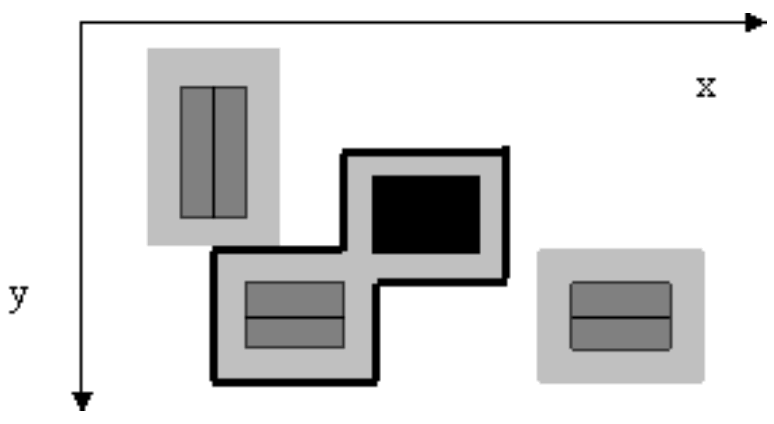
그림 1: 본관 저택(검은색)과 다른 세 건물, 그리고 각 건물의 금지 직사각형. 굵은 선은 본관 저택을 둘러싸는 최단 울타리 중 하나를 나타낸다.
입력
첫째 줄에 건물의 수를 나타내는 양의 정수 m (1 ≤ m ≤ 100)이 주어진다. 이어지는 m개의 줄에는 각 건물의 금지 직사각형이 하나씩 주어지며, 각 줄에는 네 개의 정수 tx, ty, bx, by가 공백으로 구분되어 주어진다. (tx, ty)는 직사각형의 왼쪽 위 꼭짓점, (bx, by)는 오른쪽 아래 꼭짓점의 좌표이다. 모든 좌표는 0 ≤ tx < bx ≤ 10000, 0 ≤ ty < by ≤ 10000을 만족한다. 첫 번째 직사각형이 본관 저택을 둘러싸는 금지 직사각형이다.
출력
본관 저택을 둘러싸는, 규칙을 지키는 울타리의 최소 길이를 나타내는 양의 정수 하나를 한 줄에 출력한다.