아이들은 케이크를 좋아해
시간 제한5초메모리 제한256 MB
컨벡스 폴리곤을 꼭짓점만 이용해 삼각분할할 때 가장 큰 조각과 가장 작은 조각의 면적 차이를 최대화하는 값을 구합니다.
문제
아이들은 케이크를 좋아한다. 이 문제에서는 위에서 내려다본 모양이 볼록 다각형인 케이크만 다룬다.
모든 케이크는 여러 조각으로 잘라야 한다. 각 조각은 원래 케이크의 꼭짓점을 세 꼭짓점으로 하는, 넓이가 0이 아닌 삼각형이어야 한다. 조각끼리 서로 겹칠 수 없으며, 모든 조각을 합치면 정확히 케이크 전체가 되어야 한다. 즉, 케이크를 자르는 것은 볼록 다각형을 그 꼭짓점만으로 삼각분할하는 것과 같다.
어떤 아이들은 공평함도 중요하게 여긴다. 케이크를 자르는 한 가지 방법을 정한 뒤, 가장 큰 조각과 가장 작은 조각의 넓이 차이를 생각하자. 케이크의 불공평도란 가능한 모든 자르는 방법에 대해 이 차이가 가질 수 있는 최댓값이다.
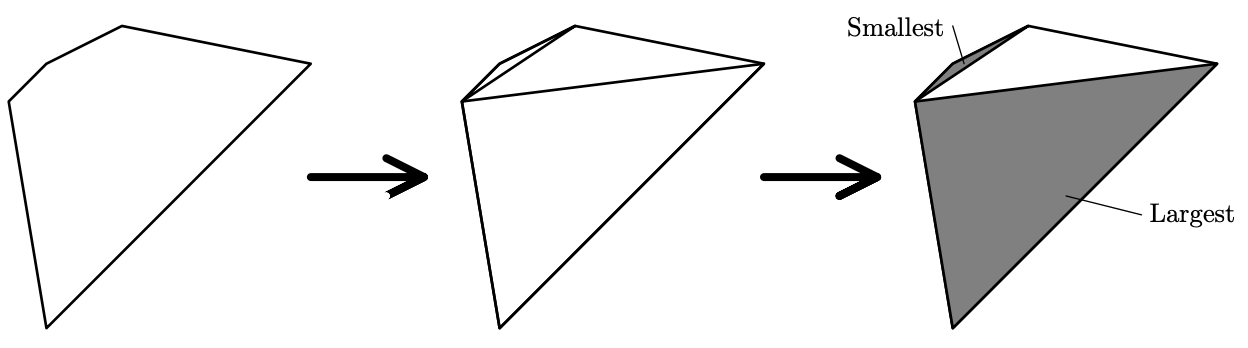
케이크가 주어졌을 때, 그 케이크의 불공평도를 구하여라.
입력
첫째 줄에 케이크의 꼭짓점 개수 이 주어진다 ().
다음 개의 줄에는 각 꼭짓점의 좌표 , 가 두 정수로 주어진다 (). 꼭짓점은 다각형의 경계를 따라가는 순서(시계 방향 또는 반시계 방향)로 주어진다.
출력
케이크의 불공평도를 소수점 아래 정확히 한 자리까지, 하나의 수로 출력한다.