시계
시간 제한2초메모리 제한128 MB
서로 비율이 정해진 속도로 도는 시계 손들을 한 시각에서 다른 시각으로 맞출 때, 느린 손을 끌고 가는 구조를 이용해 총 이동 거리를 최소화하고 그 값을 기약분수로 출력하는 문제입니다.
문제
한 유명한 건축가가 우주가 시작된 순간부터 흘러간 시간을 나타내는 거대한 시계를 세우려 합니다.
이 시계에는 일정한 속도로 도는 바늘이 개 있으며, 가장 빠른 것부터 가장 느린 것까지 번부터 번까지 번호가 매겨져 있습니다. 번 바늘은 분(초)마다 한 바퀴를 돕니다. 각 바늘은 바로 앞 번호보다 느리게 돌아서, 번 바늘이 바퀴를 도는 동안 번 바늘은 정확히 한 바퀴를 돕니다.
시계를 맞추려면 바늘 끝의 손잡이를 잡고 어느 방향으로든 돌리면 됩니다. 어떤 바늘을 돌리면 그보다 느린 모든 바늘이 평소 속도의 비율에 맞추어 함께 끌려 돌아가고, 그보다 빠른 바늘은 움직이지 않습니다. 바늘이 워낙 거대하므로, 드는 노력은 잡고 돌린 손잡이들이 이동한 거리의 총합과 같습니다.
예를 들어 길이가 각각 , , 미터인 초침, 분침, 시침 세 바늘을 생각해 봅시다. 시계를 2시 30분에서 6시 정각으로 맞추는(그림 참고) 가장 저렴한 방법은 분침을 시계 방향으로 돌린 다음 시침을 시계 방향으로 돌리는 것이며, 이때 손잡이들이 이동한 거리는 약 미터입니다.
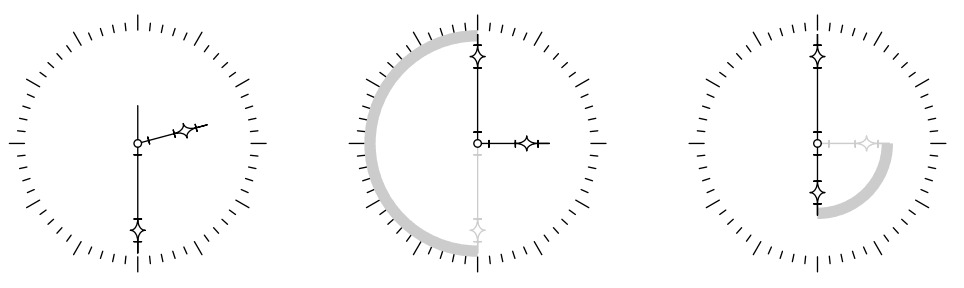
시계를 2시 30분에서 6시 정각으로 맞추기.
손잡이들이 이동하는 총 거리를 최소로 하는 방법을 찾으세요.
입력
첫째 줄에 바늘의 개수 이 주어집니다 ().
둘째 줄에 개의 정수 이 주어집니다 (). 이면 이 줄은 비어 있습니다.
셋째 줄에 바늘들의 길이를 나타내는 개의 정수 이 주어집니다 ().
다음 두 줄에는 각각 음이 아닌 정수가 하나씩 주어지는데, 순서대로 현재 시계가 가리키는 시각과 맞추어야 할 시각입니다. 두 시각 모두 초 단위이며 보다 작습니다.
출력
길이가 인 바늘을 한 바퀴 돌리면 그 손잡이는 만큼 움직이므로, 최소 총 이동 거리는 항상 어떤 유리수 에 대해 의 꼴입니다. 여기서 는 모든 바늘에 대해 (그 바늘의 길이) × (그 바늘을 돌린 바퀴 수)를 더한 값입니다.
를 기약분수 p/q 형태로 출력하세요. 이때 이고 입니다 (움직일 바늘이 없으면 0/1을 출력합니다).
위 예시에서 최소 거리는 이므로 답은 10/1입니다.