멋진 미트볼
면접 대비시간 제한1초메모리 제한128 MB
각 손님이 주문한 미트볼 개수가 원형으로 주어질 때, 1번부터 k번까지의 합과 나머지 합이 같아지는 k를 찾는다.
문제
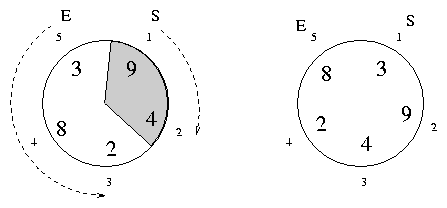
샘(Sam)과 엘라(Ella)는 케이터링 업체를 운영한다. 두 사람은 원형 탁자에 둘러앉은 손님들에게 미트볼을 대접할 때 멋진 공연을 펼치기를 좋아한다. 미트볼이 담긴 냄비를 들고 주방에서 나와 이웃한 손님부터 대접하기 시작하는데, 엘라는 시계 반대 방향으로, 샘은 시계 방향으로 나아간다. 그리고 마지막 미트볼을 동시에, 다시 서로 이웃한 손님에게 내려놓으며 끝낸다. 이 공연은 탁자를 미트볼 개수가 같은 두 구역으로 나눌 수 있을 때에만 완성된다. 이를 도와줄 프로그램을 작성하여라.
각 행사에서 탁자에는 명의 손님이 앉는다. 손님은 저마다 미트볼을 최소 개에서 최대 개까지 주문한다. 좌석에는 번부터 번까지 번호가 매겨져 있으며, 주최자는 번, 주최자의 배우자는 번에 앉는다. 샘은 주최자부터 대접한 뒤 번호가 커지는 순서로 나아가고, 엘라는 배우자부터 대접한 뒤 번호가 작아지는 순서로 나아간다. 샘이 어떤 위치 에서 멈추면 엘라는 바로 옆 위치 에서 멈춘다. 즉 샘은 번부터 번까지, 엘라는 번부터 번까지 대접한다. 샘이 대접한 미트볼 수와 엘라가 대접한 미트볼 수가 같을 때 두 구역을 똑같이 나눌 수 있다.
입력
입력은 하나 이상의 테스트 케이스로 이루어진다. 각 테스트 케이스는 손님 수 과, 이어서 번 손님부터 번 손님까지 각 손님이 주문한 미트볼 수가 주어진다. 값들은 임의의 공백으로 구분될 수 있다. 입력의 끝은 하나만 있는 줄로 표시되며, 이 줄은 처리하지 않는다.
출력
각 탁자마다 한 줄을 출력한다. 두 구역을 똑같이 나눌 수 있으면 다음을 출력한다.
Sam stops at position S and Ella stops at position E.
여기서 는 샘이 멈추는 위치, 은 엘라가 멈추는 위치이다. 모든 손님이 미트볼을 최소 개 주문하므로, 나눌 수 있는 경우 그 위치는 유일하다. 똑같이 나눌 수 없으면 다음을 출력한다.
No equal partitioning.