이집트인처럼 걷기
시간 제한1초메모리 제한128 MB
N x N 격자를 사분원 모양으로 도는 순서대로 채울 때 오른쪽 위 칸에 놓이는 번호를 각 N마다 구한다.
문제
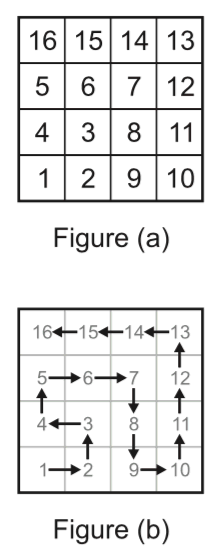
Walk Like an Egyptian은 옛날 사하라 유목 부족의 아이들이 즐기던 오래된 보드게임이다. 아이들은 돌을 모아 각 돌에 번호를 매겼다. 참가자가 명인 게임에는 개의 돌이 필요하며, 각 참가자는 그중 개를 고른다. 돌은 그림 (a)와 같은 독특한 순서로 격자 위에 놓인다(그림은 인 경우이다). 자신의 돌이 오른쪽 위 모서리에 놓인 참가자가 그 라운드에서 진다. 이어서 명으로 다음 라운드를 진행하며, 모두 번의 라운드를 거쳐 우승자를 가린다.
돌을 놓는 순서는, 피라미드 안의 어두운 방을 아무도 잃지 않고 지나가기 위해 옛날 파라오의 일꾼들이 쓰던 규칙을 따른다(그림 (b) 참고).
- 첫 번째 일꾼은 방의 왼쪽 아래 모서리에 선다.
- 다음 세 명은 첫 번째 일꾼을 둘러싸며 반시계 방향으로 사분원(1/4 원)을 이룬다.
- 그다음 다섯 명은 그 세 명을 둘러싸며, 이번에는 시계 방향으로 사분원을 이룬다.
- 방이 가득 찰 때까지 위의 두 단계를 반복한다. 왼쪽 벽이나 아래쪽 벽에 닿을 때마다 더 큰 사분원을 새로 시작하고, 방향을 시계 방향과 반시계 방향으로 번갈아 바꾼다.
돌에는 일꾼들이 자리를 잡는 순서 그대로 의 번호가 매겨진다. 이 주어질 때, 격자의 오른쪽 위 모서리에 놓이는 돌의 번호를 구하여라.
입력
입력은 하나 이상의 테스트 케이스로 이루어진다. 각 테스트 케이스는 한 줄에 참가자 수를 나타내는 정수 () 하나로 주어진다.
입력의 끝은 하나만 있는 줄로 표시되며, 이 줄은 처리하지 않는다.
출력
각 테스트 케이스마다 N => result 형식으로 한 줄씩 출력한다. 여기서 은 해당 테스트 케이스의 참가자 수이고, result는 격자의 오른쪽 위 모서리에 놓인 돌의 번호이다.