원들을 감싸는 원
시간 제한1초메모리 제한128 MB
n개의 원과 반지름 r이 주어질 때, 주어진 모든 원을 포함하는 반지름 r인 원들의 합집합 경계의 길이를 구한다.
문제
평면 위에 반지름과 위치가 제각각인 원들의 집합 가 주어진다. 이 원들은 서로 겹칠 수도 있다. 반지름이 인 원 하나를 적절한 위치에 놓으면, 이 충분히 클 때 그 원은 집합 의 모든 원을 완전히 감쌀 수 있다.
반지름 인 원이 의 모든 원을 감싸도록 놓을 수 있는 위치는 하나가 아니라 여러 개일 수 있다. 이렇게 를 감쌀 수 있는 모든 위치에서 그린 원들이 덮는 영역의 합집합을 라 하자. 즉, 에 속한 각 점에 대해 그 점과 의 모든 원을 동시에 감싸는 반지름 짜리 원이 적어도 하나 존재한다. 이때 영역 의 둘레(경계선)의 길이를 구하여라.
아래 그림 I.1은 원들의 집합 와 영역 의 예이다. 실선으로 그려진 세 원이 에 속한 원이고, 점선 원들은 를 감쌀 수 있는 원의 여러 위치를 나타내며, 굵은 점선으로 둘러싸인 부분이 영역 이다.
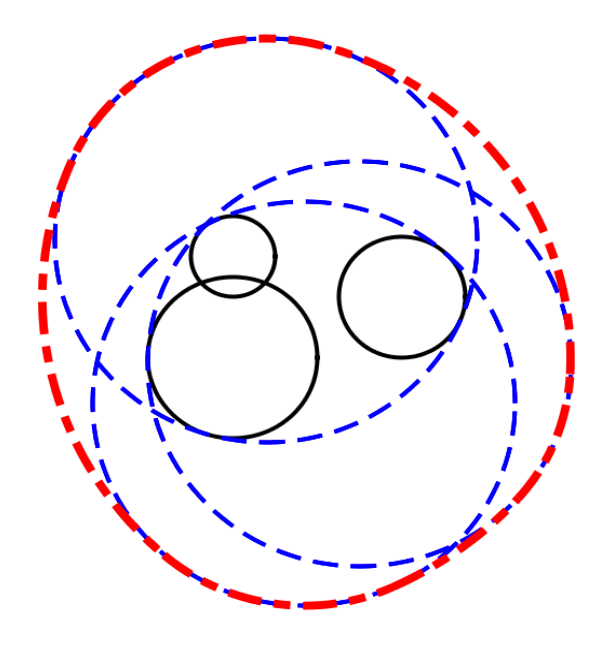
그림 I.1: 원 집합의 예
입력
입력은 여러 개의 데이터 세트로 이루어진다. 데이터 세트의 개수는 개 미만이다. 각 데이터 세트의 형식은 다음과 같다.
n r
x1 y1 r1
x2 y2 r2
...
xn yn rn
첫 줄에는 두 양의 정수 과 이 공백 하나로 구분되어 주어진다. 은 집합 에 속한 원의 개수로 을 넘지 않으며, 은 감싸는 원의 반지름으로 을 넘지 않는다.
이어지는 개의 줄에는 각각 세 정수가 공백으로 구분되어 주어진다. 는 의 번째 원의 중심 좌표이고 는 그 반지름이다. , , 임이 보장된다.
입력의 끝은 공백으로 구분된 두 개의 으로 이루어진 줄로 표시된다.
출력
각 데이터 세트마다 영역 의 둘레 길이를 소수점 아래 정확히 두 자리로 반올림하여 한 줄에 출력한다(예: 81.68). 만약 이 너무 작아 의 모든 원을 감쌀 수 없으면(즉 유효한 위치가 존재하지 않으면) 0.00만 출력한다. 그 밖의 문자는 출력하지 않는다.
입력은 반올림한 값이 명확하게 정해지도록 주어진다.
힌트
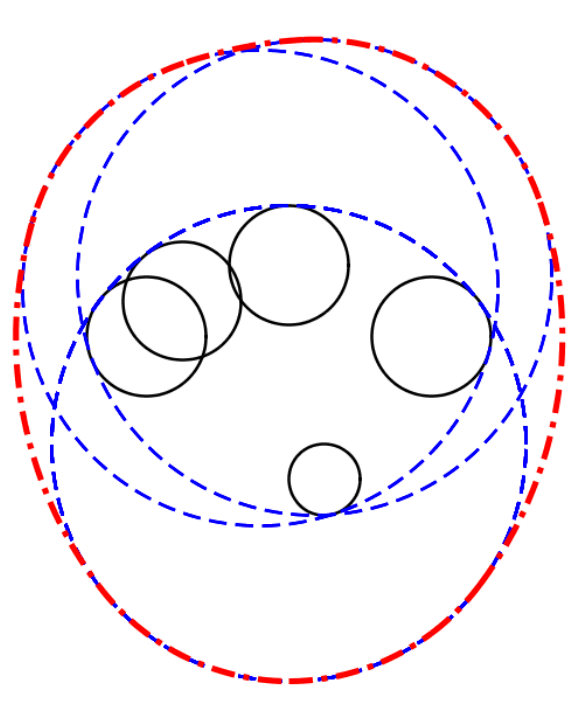
그림 I.2: 마지막 데이터 세트를 나타낸 그림