가장 많이 나오는 정사각형
면접 대비시간 제한1초메모리 제한128 MB
정수 격자 위의 점 30개 이하가 주어질 때, 네 점으로 만드는 축에 평행한 정사각형을 모두 세고 가장 많은 정사각형이 나오는 변의 길이를, 동률이면 가장 큰 길이를 출력한다.
문제
평면 위 격자점들의 집합이 주어진다. 네 꼭짓점이 모두 주어진 점 집합에 속하는 축에 평행한 정사각형(변이 수평 또는 수직이며 절대 기울어지지 않은 정사각형)을 모두 생각하자. 이러한 정사각형들 중에서 가장 많이 나타나는 변의 길이가 무엇이고, 그 변의 길이를 갖는 정사각형이 몇 개인지 구하라.
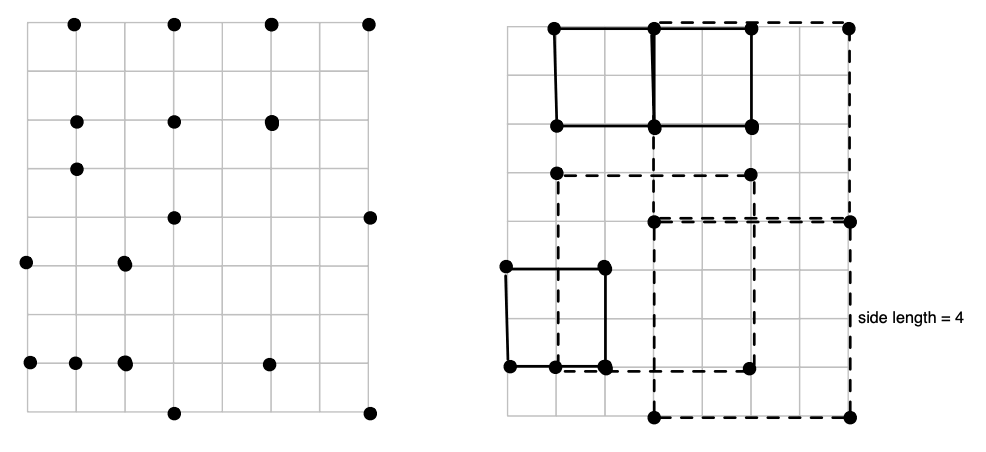
예를 들어 위 그림에서는 변의 길이가 인 정사각형이 개, 변의 길이가 인 정사각형이 개 있다.
입력
첫째 줄에 테스트 케이스의 수 가 주어진다 ().
이어지는 개의 각 줄은 하나의 테스트 케이스를 나타낸다. 각 줄은 점의 개수 ()로 시작하고, 그 뒤에 개의 좌표 쌍(즉 정수 개)이 온다. 모든 좌표는 인 정수이다.
출력
각 테스트 케이스마다 한 줄을 출력한다.
점들로 축에 평행한 정사각형을 하나 이상 만들 수 있으면 다음과 같이 출력한다.
LENGTH = L, COUNT = C
여기서 은 가장 많은 정사각형을 이루는 변의 길이이고, 는 그 변의 길이를 갖는 정사각형의 개수이다. 최대 개수를 갖는 변의 길이가 여러 개라면 그중 가장 큰 변의 길이 을 사용한다.
점들로 축에 평행한 정사각형을 하나도 만들 수 없으면 다음을 출력한다.
No squares among the points.