동전 수집
면접 대비시간 제한1초메모리 제한128 MB
로봇이 격자의 왼쪽 위에서 오른쪽 아래로 오른쪽이나 아래로만 이동할 때 주울 수 있는 동전의 최대 개수를 구한다.
문제
격자판의 각 칸에 동전이 놓여 있으며, 한 칸에는 동전이 최대 한 개만 놓입니다. 로봇은 격자판의 왼쪽 위 칸에서 출발하여 오른쪽 아래 칸까지 이동하면서 되도록 많은 동전을 모으려고 합니다. 로봇은 한 번의 이동에서 현재 칸을 기준으로 오른쪽으로 한 칸 또는 아래로 한 칸만 움직일 수 있습니다. 동전이 있는 칸을 지날 때는 항상 그 동전을 줍습니다. 로봇이 모을 수 있는 동전의 최대 개수를 구하세요.
아래 그림은 격자판의 한 예시입니다.
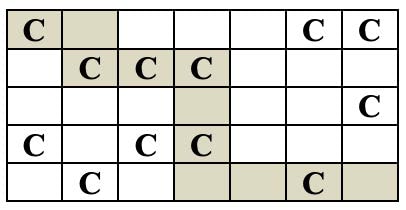
입력
첫째 줄에는 테스트 세트의 개수를 나타내는 양의 정수 가 주어집니다.
각 테스트 세트의 첫째 줄에는 격자판의 크기를 나타내는 두 양의 정수 과 이 주어집니다 (, ). 이어지는 개의 줄에는 각각 개의 문자가 주어지며, 각 문자는 빈 칸을 뜻하는 X 또는 동전을 뜻하는 C입니다.
출력
각 테스트 세트마다 로봇이 모을 수 있는 동전의 최대 개수를 한 줄에 하나씩 출력하세요.