뱀과 사다리
면접 대비시간 제한1초메모리 제한128 MB
고정된 100칸 보드에서 주어진 사다리 3개와 뱀 3개를 적용하며 주사위 합만큼 말을 이동시키고, 말이 100에 도착하거나 그만두면 끝나는 게임을 시뮬레이션한다.
문제
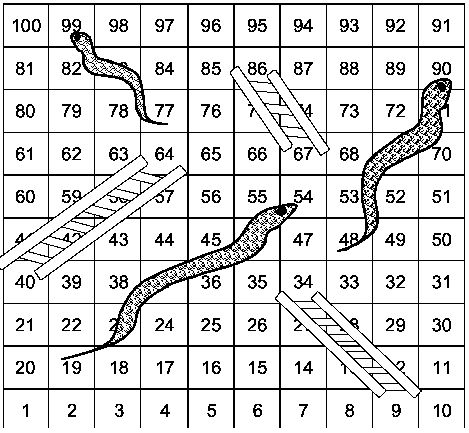
뱀과 사다리(Snakes and Ladders) 보드게임을 시뮬레이션한다. 게임판은 번부터 번까지의 칸으로 이루어져 있고, 말은 번 칸에서 시작한다.
매 차례마다 주사위 두 개를 굴려 나온 눈의 합만큼 말을 앞으로 이동시킨다. 이동한 뒤 말이 도착한 칸에 따라 다음이 적용된다.
- 도착한 칸이 사다리의 아래쪽 끝이면 사다리를 타고 위쪽 끝 칸으로 올라간다.
- 도착한 칸이 뱀의 머리(위쪽 끝)이면 뱀을 타고 꼬리(아래쪽 끝) 칸으로 미끄러져 내려간다.
이 게임판에는 사다리가 개(, , ), 뱀이 개(, , ) 있다. 사다리의 위쪽 끝이나 뱀의 꼬리는 또 다른 사다리나 뱀의 시작 칸이 아니므로 연쇄 이동은 일어나지 않는다.
주사위 눈의 합만큼 전진하면 번 칸을 넘어가는 경우에는 말을 전혀 움직이지 않는다. 말이 마지막 칸인 번에 정확히 도착하면 승리한다.
입력
입력은 여러 줄로 이루어지며, 각 줄에는 정수 하나가 주어진다.
- 이상 이하의 정수는 이번 차례에 굴린 주사위 두 개의 눈의 합이다.
- 은 게임을 그만둔다는 뜻이다.
입력은 이 주어지거나 말이 번 칸에 도착하면 끝난다.
출력
매 차례마다 말이 최종적으로 도착한 칸의 번호를 다음 형식으로 한 줄에 출력한다.
You are now on square N
여기서 은 사다리나 뱀을 적용한 뒤 말이 위치한 칸의 번호이며, 말이 전진하지 못하고 제자리에 머문 경우에는 현재 칸의 번호이다. 말이 번 칸에 도착하면 해당 줄을 출력한 다음 You Win!을 출력하고 프로그램을 종료한다. 입력으로 이 주어지면 You Quit!을 출력하고 종료한다.