BSP 트리
시간 제한1초메모리 제한128 MB
p개의 기울어진 평면을 xz 평면에 삽입해 BSP 트리를 만들고 n개의 다각형을 리프 영역에 배정한 뒤, 트리가 정하는 그리기 순서대로 물체 이름을 출력한다.
문제
여러 물체가 있는 장면을 화면에 그릴 때, 물체를 그리는 순서는 매우 중요하다. 일반적으로 화면에서 더 멀리 있는 물체를 먼저 그려야, 나중에 그리는 가까운 물체가 그 위에 겹쳐 보이게 된다. 두 물체가 서로 겹치지 않는다면 그리는 순서는 상관없다.
이진 공간 분할(BSP, binary space-partitioning) 트리는 이러한 순서를 정하는 데 도움을 주는 자료구조이다. 화면은 축을 중심으로 하는 xy-평면 위에 있고, 축은 화면을 보는 사람의 반대 방향을 가리킨다고 하자. 관찰자는 축의 근처에 있으며, 모든 물체는 화면 반대편, 즉 영역에 놓여 있다.
BSP 트리는 축과 평행한 평면들을 차례로 삽입하여 만든다. 첫 번째 평면은 공간을 두 영역으로 나눈다. 관찰자가 있는 영역과 관찰자가 없는 영역이다. 모든 물체를 자신이 속한 영역으로 분류하는데, 관찰자가 있는 영역의 물체들은 반드시 다른 영역의 물체들보다 나중에 그려야 한다. 이 시점에서 BSP 트리는 두 영역을 각각 자식으로 갖는 루트가 된다.
두 번째 평면은 공간을 다시 나누어, 앞의 두 영역을 각각 둘로 쪼개 총 네 개의 영역을 만든다. 이제 트리는 세 단계가 되고 각 영역은 잎(leaf)에 놓인다(한 영역에 여러 물체가 있을 수도, 하나도 없을 수도 있다). 이 과정은 모든 영역이 물체를 최대 한 개만 가질 때까지, 또는 미리 정해진 개수의 평면을 모두 사용할 때까지 반복한다. 한 영역에 물체가 하나만 남으면, 이후에 평면을 더 추가하더라도 그 영역은 더 나누지 않는다.
모든 물체는 축과 평행하므로, xz-평면으로 투영한 모습(축 방향에서 내려다본 모습)만 다루면 된다. 아래 그림은 평면을 1개, 2개, 3개 사용했을 때의 모습을 보여준다.
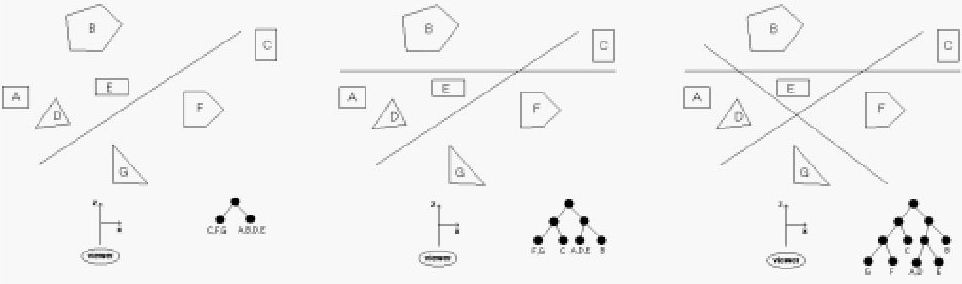
이렇게 완성한 BSP 트리를 단순히 순회하면 물체를 그릴 올바른 순서를 얻을 수 있다.
입력
입력은 하나의 장면을 설명한다.
- 첫째 줄에는 물체의 개수 ()이 주어진다.
- 다음 개의 줄에는 각 물체가
m x1 z1 x2 z2 ... xm zm형식으로 주어진다. 여기서 ()은 꼭짓점의 개수이고, 각 는 물체를 xz-평면에서 자른 단면의 꼭짓점이다. 물체는 주어진 순서대로 A, B, C, ... 로 이름 붙인다. - 그다음 줄에는 평면의 개수 ()가 주어진다.
- 다음 개의 줄에는 각 평면이 xz-평면과 만나는 직선 위의 두 점이
x1 z1 x2 z2형식으로 주어진다.
어떤 평면의 직선도 물체(모서리와 꼭짓점 포함)와 만나지 않으며, 축과 평행한 평면은 없다. 모든 좌표는 정수이다.
출력
주어진 BSP 트리에 따라 물체를 그려야 하는 순서대로 물체의 이름을 한 줄에 출력한다. 한 영역에 물체가 둘 이상 있으면, 그 물체들은 알파벳 순서로 나열한다.