편향된 주사위
시간 제한1초메모리 제한128 MB
편향된 주사위를 하나씩 떨어뜨려 쌓은 뒤, 위에서 보이는 면에 적힌 숫자의 개수를 세는 문제.
문제
무작위 알고리즘 연구로 유명한 랜덤 교수는 이제 편향된 주사위로 실험을 하고 있다. 실험은 평면 위의 고정된 위치에서 주사위 여러 개를 하나씩 떨어뜨리는 방식으로 진행된다. 주사위는 스스로 회전하지 않은 채 평면 또는 이미 놓여 있는 주사위 위로 떨어지며, 자신의 성질에 따라 굴러 떨어질 수 있다. 교수는 이렇게 만들어진 더미를 관찰하여, 위에서 내려다볼 때 보이는 면에 각 숫자가 몇 번 나타나는지 기록한다. 모든 주사위는 크기가 같고 면에 매겨진 숫자 배치도 동일하며, 그 배치는 그림 C-1과 같다. 마주 보는 두 면의 숫자 합은 항상 7이다(1↔6, 2↔5, 3↔4).
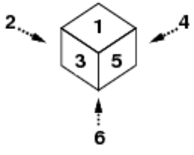
그림 C-1: 주사위의 숫자 배치
이 주사위에는 다음과 같은 특별한 성질이 있다.
(1) 보통 주사위는 네 방향으로 구를 수 있지만, 이 실험의 주사위는 숫자 1, 2, 3이 있는 면 방향으로는 절대 구르지 않고 숫자 4, 5, 6이 있는 면 방향으로만 구를 수 있다. 그림 C-2의 상황에서 이 주사위는 두 방향 중 하나로만 구를 수 있다.
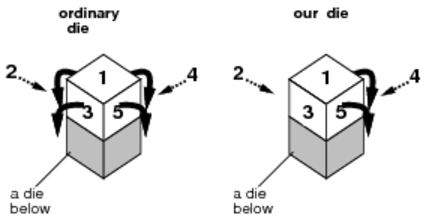
그림 C-2: 보통 주사위와 편향된 주사위
(2) 주사위는 구른 뒤에 아래로 떨어질 수 있을 때에만 구른다(그림 C-3). 구를 수 있는 방향이 여러 개이면, 그 방향들에 놓인 면 숫자 중 가장 큰 숫자가 있는 방향으로 구른다.
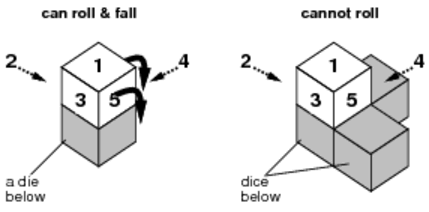
그림 C-3: 아래로 떨어질 수 있을 때에만 구를 수 있다
(3) 주사위가 구를 때는 정확히 90도 회전한 뒤, 바닥 면이 다른 주사위나 평면에 닿을 때까지 곧장 아래로 떨어진다(그림 C-4의 [B] 또는 [C]).
(4) 굴러서 떨어진 뒤에도 위 (1)~(3)의 규칙에 따라 이 과정을 반복한다.
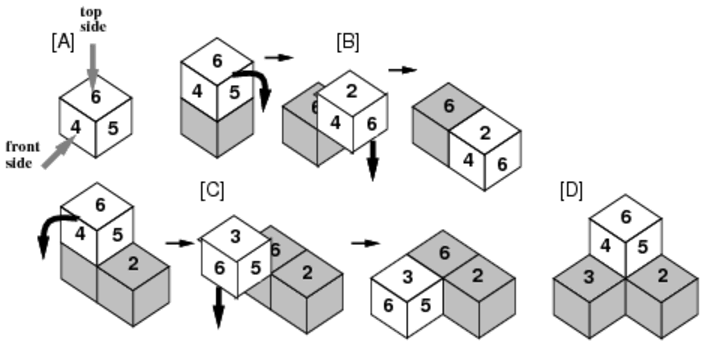
그림 C-4: 편향된 주사위가 쌓이는 예
예를 들어 네 개의 주사위를 모두 같은 방향(위 면 6, 앞 면 4)으로 떨어뜨리면 그림 C-4와 같은 더미가 만들어진다.
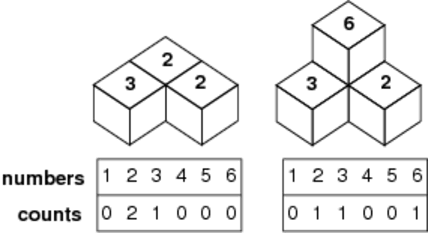
그림 C-5: 기록의 예
더미가 완성되면 위에서 볼 때 보이는 면 중 숫자 1부터 6까지가 각각 몇 개인지 세어 기록한다. 예를 들어 그림 C-5의 왼쪽 경우는 0 2 1 0 0 0, 오른쪽 경우는 0 1 1 0 0 1로 기록된다.
입력
입력은 여러 개의 데이터셋으로 이루어지며, 각 데이터셋의 형식은 다음과 같다.
n
t1 f1
t2 f2
...
tn fn
여기서 n (1 ≤ n ≤ 100)은 떨어뜨릴 주사위의 개수를 나타내는 정수이다. ti와 fi (1 ≤ ti, fi ≤ 6)는 공백으로 구분된 두 정수로, i번째 주사위를 놓을 때의 위 면과 앞 면의 숫자를 각각 나타낸다.
입력의 끝은 0 하나만 있는 줄로 표시된다.
출력
각 데이터셋마다 공백으로 구분된 여섯 개의 정수를 출력한다. 이 정수들은 위에서 볼 때 보이는 면 중 숫자 1부터 6까지가 각각 몇 개인지를 순서대로 나타낸다. 출력에는 그 밖의 다른 문자가 있으면 안 된다.