수영장
면접 대비시간 제한1초메모리 제한128 MB
m×n 격자에 탑의 높이가 주어질 때, 바깥에서 물을 채웠을 때 탑 사이에 고이는 물의 총 부피를 구한다.
문제
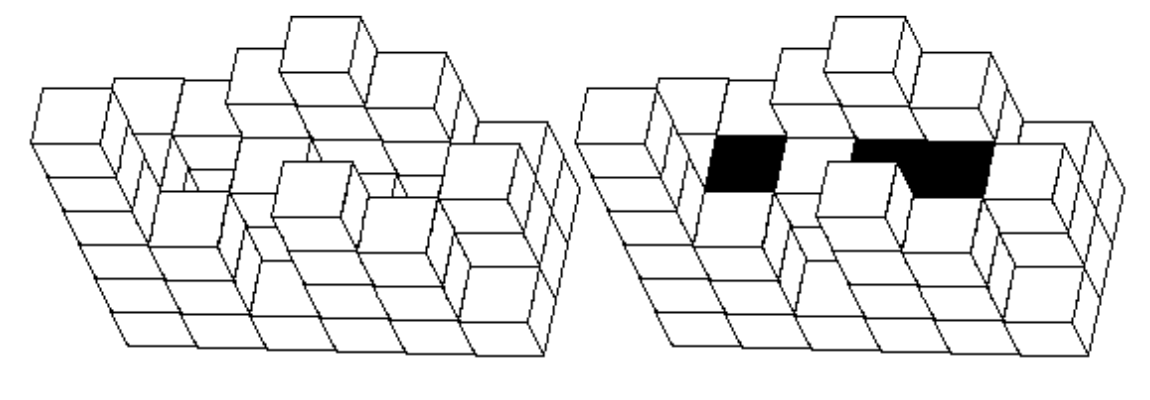
옛날에는 수영장을 다음과 같이 만들었습니다. 먼저 가로 미터, 세로 미터 크기의 직사각형 영역을 정합니다. 이 영역을 한 변의 길이가 1미터인 정사각형 칸으로 나누면 개의 칸이 생깁니다. 그런 다음 각 칸에는 한 변의 길이가 1인 완벽하게 재단된 화강암 정육면체 하나, 또는 이런 정육면체를 쌓아 올린 탑을 놓습니다.
정육면체는 매우 정밀하게 만들어져서, 두 정육면체의 모서리가 서로 맞닿기만 해도 그 사이가 완전히 밀봉되어 물이 새지 않습니다.
물을 흘려보내면 이렇게 쌓은 '정육면체 더미'는 제한된 양의 물만 담을 수 있습니다.
이 수영장에 담을 수 있는 물의 최대 부피(세제곱미터)를 구하는 프로그램을 작성하세요.
입력
첫째 줄에 직사각형 영역의 두 변의 길이인 양의 정수 과 이 주어집니다 ().
다음 개의 줄에는 각각 개의 자연수가 주어집니다.
번째 줄의 번째 수는 번째 행, 번째 열에 놓인 정육면체 탑의 높이(즉, 그 칸에 쌓인 정육면체의 개수)를 나타냅니다. 모든 칸에는 정육면체가 적어도 하나 있으며, 어떤 칸에서도 탑의 높이는 10000을 넘지 않습니다.
출력
표준 출력의 유일한 줄에, 주어진 수영장에 담을 수 있는 물의 최대 부피(세제곱미터)를 나타내는 정수 하나를 출력합니다.
힌트
아래 그림은 빈 수영장과 물이 가득 찬 수영장을 위에서 내려다본 모습입니다.