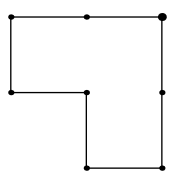
다각형의 넓이
시간 제한1초메모리 제한1024 MB
격자선을 따라 움직이는 단위 이동 문자열로 주어진 직교 볼록 다각형의 넓이를 구한다.
문제
모눈종이 위에 격자선만 따라 닫힌 다각형을 그릴 수 있습니다. 즉, 다각형의 모든 변은 수평 또는 수직이며 길이는 정수입니다. 각 다각형을 그리는 규칙은 단위 선분을 나열한 문자열로 주어집니다: W — 왼쪽, N — 위쪽, E — 오른쪽, S — 아래쪽. 이 다각형은 자기 자신과 닿거나 교차하지 않습니다. 즉, 다각형의 경로에 등장하는 각 점은 오직 한 번만 나타납니다.
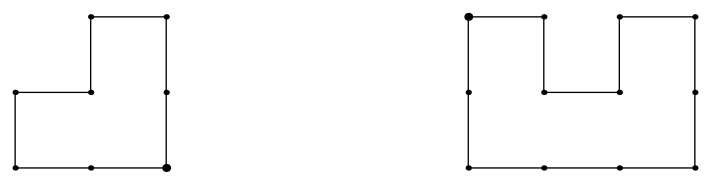
다각형은 또한 직교 볼록(orthogonally convex)입니다. 즉, 다각형과 만나는 모든 수평선 또는 수직선은 다각형에 들어가고 나오는 일이 정확히 한 번씩만 일어납니다. 쉽게 말해, 다각형에는 U자 모양과 같은 부분이 없습니다. 예를 들어 NNWSWSEE(그림 왼쪽)는 직교 볼록 다각형이지만, SSEEENNWSWNW(그림 오른쪽)는 그렇지 않습니다.
이렇게 주어진 다각형의 넓이를 구하세요.
입력
입력은 정확히 두 줄로 이루어져 있습니다. 첫째 줄에는 선분의 개수 ()가 주어집니다. 둘째 줄에는 문자 N, E, S, W로만 이루어진 길이 의 문자열이 주어집니다.
출력
입력으로 주어진 다각형의 넓이를 정수 하나로 출력하세요.
힌트