펜타고 (Pentago)
시간 제한1초메모리 제한1024 MB
백이 수를 둔 6x6 펜타고 보드가 주어질 때, 백이 오목을 완성하는 가장 작은 번호의 사각형 회전과 방향을 찾는다.
문제
비타우타스(Vytautas)와 요나스(Jonas)가 "펜타고(Pentago)" 게임을 한다. 이 게임의 판은 3×3 크기의 정사각형 4개로 이루어진다. 두 사람은 번갈아 가며, 자기 차례에 자신의 색(검은색 또는 흰색) 구슬 하나를 놓은 뒤 정사각형 하나를 골라 시계 방향 또는 반시계 방향으로 90° 회전시킨다. 자기 차례에 같은 색 구슬 5개를 가로, 세로, 또는 대각선으로 가장 먼저 한 줄로 늘어놓는 사람이 이긴다.
비타우타스(흰색)는 이미 구슬을 판에 놓았고, 이제 정사각형 하나를 회전시켜야 한다. 그가 바로 이번 차례에 이길 수 있는지 판단하라. 이길 수 있다면, 어떤 정사각형을 어느 방향으로 회전시켜야 하는지 구하라.
정사각형에는 아래 그림처럼 1부터 4까지 번호가 매겨져 있다(1번은 왼쪽 위, 2번은 오른쪽 위, 3번은 왼쪽 아래, 4번은 오른쪽 아래의 3×3 블록이다):
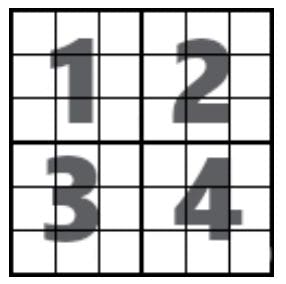
정사각형 하나를 시계 방향 또는 반시계 방향으로 90° 회전시킬 수 있다.
예를 들어 다음과 같은 판이 있다고 하자:
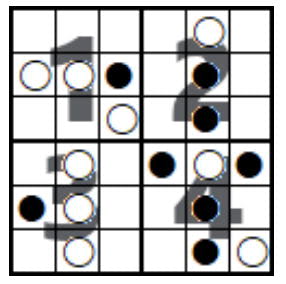
첫 번째 정사각형을 반시계 방향으로 90° 회전시키면 다음과 같아진다:
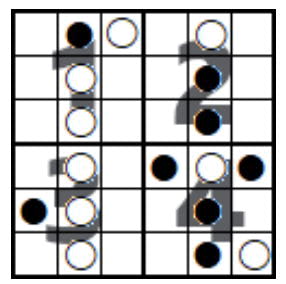
이 회전 후 흰색 구슬이 한 줄로 5개가 되어 흰색이 이긴다.
입력
흰색을 두는 사람이 구슬을 놓은 직후의 판 상태를 나타내는, 각각 6개의 정수로 이루어진 6개의 줄이 주어진다:
0— 해당 칸이 비어 있다;1— 해당 칸에 흰색 구슬이 놓여 있다;2— 해당 칸에 검은색 구슬이 놓여 있다.
출력
흰색이 이번 차례에 이길 수 있으면 첫 번째 줄에 LAIMI를 출력한다. 두 번째 줄에는 두 정수, 즉 회전시킬 정사각형의 번호와 이기기 위해 회전시켜야 하는 각도를 출력한다. 각도는 항상 반시계 방향 기준이며, 90(반시계 방향 90°) 또는 270(시계 방향 90°와 같음) 중 하나이다.
이기는 회전이 여러 개일 수 있다. 답을 유일하게 정하기 위해, 후보 회전들을 먼저 정사각형 번호(1, 2, 3, 4) 순으로, 그다음 각도(90이 270보다 먼저) 순으로 정렬했을 때 가장 먼저 나오는 이기는 회전을 출력한다. 즉, 정사각형 번호가 가장 작은 이기는 회전을 출력하되, 번호가 같으면 각도가 더 작은 것을 출력한다.
흰색이 이번 차례에 이길 수 없으면 NELAIMI를 출력한다.
검은색 구슬의 위치는 중요하지 않다. 즉, 회전 후 흰색 5개와 검은색 5개가 동시에 한 줄로 만들어지더라도, 지금은 흰색의 차례이므로 흰색이 이긴다.