마야 달력 날짜 변환
시간 제한1초메모리 제한128 MB
그레고리력 날짜와 마야 장기력, 그리고 촐킨과 하압으로 이루어진 의례력을 서로 변환한다. 윤년과 기원전 연도를 처리해야 한다.
문제
NASA는 과거로 갈 수 있는 타임머신을 비밀리에 만들었고, 첫 임무로 마야 문명을 탐사하려 한다. 연구진은 마야 유적에서 조사할 만한 중요한 날짜들을 모았지만, 타임머신은 그레고리력 날짜만 입력으로 받는다. 따라서 마야 날짜를 먼저 그레고리력으로 변환해야 한다.
그레고리력 날짜 또는 마야 장기력(Long Count)이 주어지면, 그에 대응하는 그레고리력 날짜, 마야 장기력, 마야 의례 날짜를 출력하는 프로그램을 작성하라.
마야 장기력
마야 달력의 기준일(0일)은 기원전 3114년 8월 13일이다. 모든 날짜는 이 기준일로부터 지난 날수로 센다. 하루는 K’in이며, 20 K’in이 1 Winal, 18 Winal이 1 Tun, 20 Tun이 1 K’atun, 20 K’atun이 1 Bak’tun이다. 장기력은 다섯 숫자 Bak’tun.K’atun.Tun.Winal.K’in 형태로 적는다. 예를 들어 12.4.9.13.3은 기준일로부터 12 Bak’tun, 4 K’atun, 9 Tun, 13 Winal, 3 K’in(일)이 지났음을 뜻한다.
마야 의례 날짜
의례 날짜는 서로 독립적으로 도는 두 주기를 함께 적은 것이다.
하압(Haab, 태양력). 태양년은 윤일 없이 365일이다. 20일짜리 달 18개와 5일짜리 달 1개로 이루어진다. 달 이름은 순서대로 Pop, Wo, Sip, Sotz’, Tzek, Xul, Yaxk’in, Mol, Ch’en, Yax, Sak, Keh, Mak, K’ank’in, Muwan, Pax, K’ayab, Kumk’u, Wayeb이다. 한 달의 날은 1부터 19까지(Wayeb은 1부터 4까지) 번호를 매기며, 달의 마지막 날은 다음 달의 0일로 적는다. 따라서 첫 달의 마지막 날은 20 Pop이 아니라 0 Wo로 쓰고, 5일짜리 달 Wayeb의 마지막 날은 5 Wayeb이 아니라 0 Pop으로 쓴다.
촐킨(Tzolk’in, 의례력). 모든 날은 1부터 13까지의 숫자와 20개의 이름 중 하나를 함께 가진다. 이름은 Imix, Ik’, Ak’bal, K’an, Chikchan, Kimi, Manik’, Lamat, Muluk, Ok, Chuwen, Eb, Ben, Ix, Men, Kib, Kaban, Etz’nab, Kawak, Ahaw이다. 숫자와 이름은 매일 함께 다음으로 넘어가서 1 Imix, 2 Ik’, 3 Ak’bal, …, 13 Ben, 1 Ix, 2 Men, … 처럼 진행된다. 같은 숫자·이름 조합은 260일(의례년)이 지나야 다시 나타난다.
두 부분은 함께 적으며, 예를 들어 2 Kimi 10 Yax에서 2 Kimi가 촐킨, 10 Yax가 하압 부분이다. 기원전 3114년 8월 13일의 의례 날짜는 4 Ahaw 8 Kumk’u이다.
그레고리력
우리 달력은 윤일을 쓴다. 윤일은 4년마다 넣되 100년마다는 넣지 않고, 다시 400년마다는 넣는다. 또한 0년은 없어서 기원전 1년 12월 31일 다음 날이 곧바로 서기 1년 1월 1일이다. 그래서 기원전의 마지막 윤년은 (400년 규칙에 따라) 기원전 1년이고, 그다음 윤년은 서기 4년이다.
입력
첫 줄에는 시나리오의 개수가 주어진다.
각 시나리오는 한 줄로 주어지며, 마야 장기력이거나 그레고리력 날짜이다.
- 마야 장기력은 점(
.)으로 구분된 음이 아닌 정수 5개이다. 예:12.19.10.6.14. - 그레고리력 날짜는 슬래시(
/)로 구분된 세 정수d,m,y로 이루어지며 , , 을 만족한다. 각 값은 0으로 채워져 있을 수도, 아닐 수도 있으나d와m은 두 자리,y는 네 자리를 넘지 않는다. 날짜 뒤에는 항상 공백 하나와BC또는AD가 붙는다.
기원전 3114년 8월 13일보다 이전이거나, 마야 장기력의 마지막 날인 13.0.0.0.0보다 이후인 날짜는 주어지지 않는다. 주어지는 날짜는 항상 해당 달력에서 유효하다.
출력
각 시나리오마다 먼저 Scenario #i: 줄을 출력한다. 여기서 i는 1부터 시작하는 시나리오 번호이다. 이어서 입력 형식과 관계없이 같은 날짜를 나타내는 세 줄을 출력한다.
- 그레고리력 날짜. 입력과 같은 형식이되 0으로 채우지 않는다.
- 마야 장기력.
- 마야 의례 날짜. 공백 하나로 구분된 네 부분으로, 촐킨의 숫자와 이름, 그다음 달의 날과 달 이름을 적는다.
이어지는 시나리오 사이에는 빈 줄 하나를 넣어 구분한다.
힌트
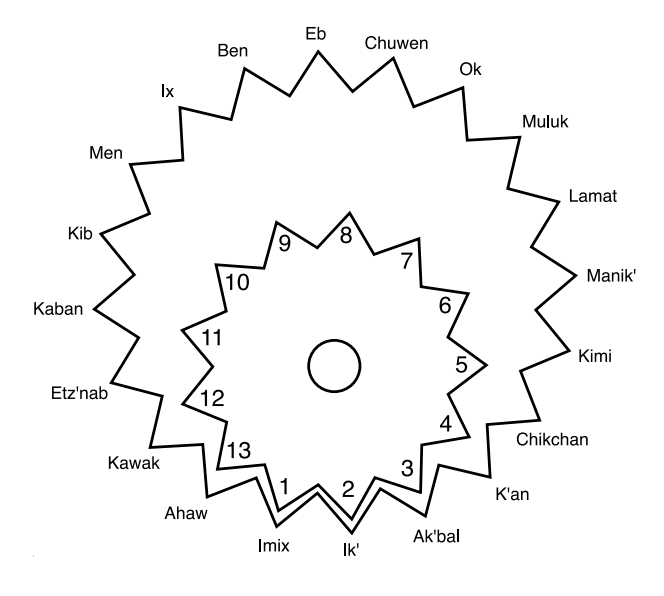
그림 1: 마야 의례 날짜.