교통사고
시간 제한1초메모리 제한128 MB
충돌 전 직선 운동에서 각 자동차의 네 부분(모서리와 인접한 변의 절반) 중 어느 부분이 상대 차와 먼저 닿는지 구한다.
문제
도로에서 두 자동차가 충돌하여 각각 어느 정도 파손되었고, 늘 그렇듯 "누구의 잘못인가?"라는 질문이 생겼다. 이에 답하려면 사건의 경과를 정확히 재구성해야 한다. 목격자 진술을 모으고 타이어 자국을 분석하여, 충돌 직전 두 자동차의 위치와 속도를 알아냈다. 각 자동차는 그 위치에서 충돌 순간까지 자기 정면 방향으로 직진했다.
주어진 자료를 바탕으로, 각 자동차의 어느 부위가 상대 자동차와 가장 먼저 접촉했는지 계산하는 프로그램을 작성하라. 부위 번호는 아래 그림과 같이 매긴다.
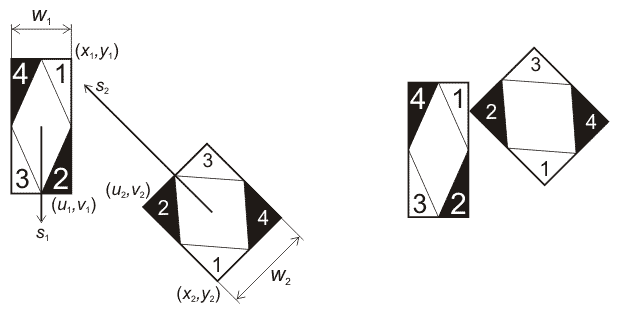
각 자동차를 위에서 본 직사각형이라고 하자. 직사각형의 둘레는 네 변의 중점에서 나뉘며, 각 꼭짓점(코너)과 그 양옆으로 인접한 두 변의 중점까지의 부분이 하나의 부위를 이룬다. 진행 방향을 기준으로 부위 번호는 다음과 같다: 1 = 뒤-왼쪽, 2 = 앞-왼쪽, 3 = 앞-오른쪽, 4 = 뒤-오른쪽 꼭짓점이 속한 부위이다.
입력
입력은 12개의 실수 로 이루어진다. 각 자동차에 대해 는 뒤-왼쪽 꼭짓점, 는 앞-왼쪽 꼭짓점의 좌표이고, 는 자동차의 폭, 는 속력이다. 자동차의 진행 방향은 뒤-왼쪽 꼭짓점에서 앞-왼쪽 꼭짓점으로 향하는 방향이며, 폭은 진행 방향의 오른쪽으로 잰다.
출력
두 정수 를 출력한다. 는 자동차 에서 상대 자동차와 가장 먼저 접촉한 부위의 번호이다. 두 부위가 동시에 접촉하면 더 작은 번호를 출력한다.
제한
- , .
- 반드시 충돌이 일어나도록 입력이 주어진다. 처음에 두 자동차는 공통점을 가지지 않는다.