플롯
면접 대비시간 제한30초메모리 제한128 MB
n개의 점을 최대 m개의 연속한 구간으로 나누고 각 구간을 한 점으로 대체할 때, 원래 점에서 대표점까지 거리의 최댓값을 최소로 만드는 값을 구한다.
문제
평면 위의 점들의 수열을 플롯(plot) 이라고 부른다. 주어진 플롯 을, 원래 플롯과 가장 비슷하면서도 점의 개수가 최대 개 () 이하인 다른 플롯으로 바꾸려고 한다.
새 플롯은 다음과 같이 만든다. 수열 을 개 () 의 연속한 부분수열로 나눈다.
여기서 이다. 그런 다음 각 부분수열 () 을 하나의 새로운 점 로 대체한다. 이때 점 각각이 점 로 축약(contract) 되었다고 말한다. 그 결과 점 로 이루어진 새 플롯이 만들어진다.
새로 만든 플롯이 원래 플롯과 얼마나 닮았는지는, 모든 점 에서 자신이 축약된 점까지의 거리 중 최댓값으로 측정한다.
여기서 는 두 점 사이의 거리이며, 다음 공식으로 주어진다.
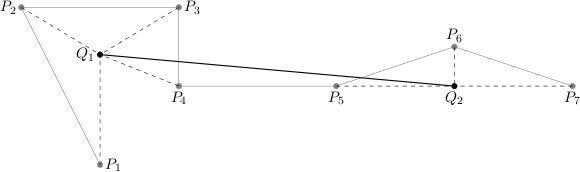
위 그림은 예시 플롯 과 새 플롯 를 나타낸다. 여기서 는 로, 은 로 축약되었다.
개의 점으로 이루어진 플롯이 주어질 때, 점의 개수가 최대 개 이하이면서 원래 플롯과의 닮음 척도(위에서 정의한 최대 축약 거리)가 최소가 되도록 플롯을 만들 수 있다. 연속한 부분수열로 나누는 방법은 자유롭게 정할 수 있다. 이때 가능한 최소 닮음 척도 를 구하여라.
입력
첫째 줄에 두 정수 과 이 공백 하나로 구분되어 주어진다 (). 이어지는 개의 줄 중 번째 줄에는 두 정수 와 가 공백 하나로 구분되어 주어지며 (), 이는 점 의 좌표 를 나타낸다.
출력
첫째 줄에 실수 하나 를 출력한다. 는 점의 개수가 개 이하가 되도록 만들 수 있는 모든 플롯에 대하여, 원래 플롯과의 닮음 척도(각 점에서 자신이 축약된 점까지 거리의 최댓값)의 최솟값이다. 소수점 아래 정확히 자리까지 반올림하여 출력한다.