벽 칠하기
시간 제한1초메모리 제한128 MB
축에 나란한 직사각형 n개가 주어질 때, 그중 적어도 n-1개가 덮는 영역의 넓이를 구한다.
문제
바이타자르는 다시 집을 칠할 때가 되었지만 칠하는 일을 그다지 좋아하지 않습니다. 그런데 페인트 통과 붓이 아이들의 큰 관심을 끄는 것을 보고, 붓을 아이들에게 나눠 준 뒤 벽 하나를 칠해 달라고 부탁했습니다. 아이들은 저마다 바닥에 평행하거나 수직인 변을 가진 직사각형 모양의 영역을 칠했습니다.
안타깝게도 바이타자르가 산 페인트는 품질이 좋지 않아서, 지금 보기 좋은 부분은 많아야 한 명의 아이만 칠하지 않고 건너뛴 영역뿐입니다. 이런 부분들의 전체 넓이는 얼마일까요?
입력
첫째 줄에 바이타자르의 아이 수를 나타내는 정수 ()이 주어진다.
이어지는 개의 줄에는 각 아이가 칠한 영역이 하나씩 주어진다. 번째 줄에는 네 정수 , , , (, )가 주어진다. 이는 번째 아이가 왼쪽 아래 꼭짓점이 , 오른쪽 위 꼭짓점이 이며 변이 좌표축에 평행한 직사각형 영역을 칠했다는 뜻이다.
출력
더 이상 칠할 필요가 없는 벽 부분, 즉 적어도 명의 아이가 칠한 부분의 넓이를 정수 하나로 출력한다.
힌트
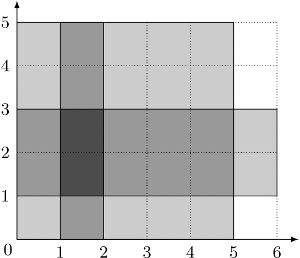
그림에서 더 어두운 색과 가장 어두운 색으로 칠해진 영역이 답에 포함된다.