직사각형 2
시간 제한2초메모리 제한512 MB
n x m 격자에서 네 꼭짓점이 격자점이고 둘레가 p 이상인 축에 평행한 직사각형의 개수를 센다.
문제
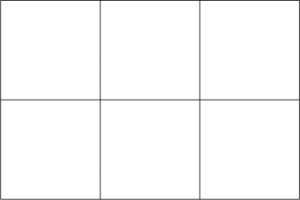
위 그림의 격자에서 꼭짓점이 모두 격자점 위에 있고 각 변이 수직 또는 수평인 직사각형을 세어 보면 다음과 같습니다. 6개, 4개, 3개, 2개, 2개, 1개로 모두 18개입니다. 여기서 격자점이란 수직선과 수평선이 만나는 교차점을 뜻합니다.
크기가 인 격자가 주어집니다. 꼭짓점이 모두 격자점 위에 있고 각 변이 수직 또는 수평인 직사각형 중에서, 둘레의 길이가 이상인 것의 개수를 구하십시오. 크기가 인 직사각형의 둘레는 입니다.
입력
표준 입력의 첫 번째 줄이자 유일한 줄에 세 정수 , , 가 공백으로 구분되어 주어집니다 (, ). 과 은 격자의 크기이고, 는 직사각형 둘레의 하한입니다.
출력
첫 번째 줄에 크기가 인 격자에서 꼭짓점이 격자점 위에 있고 각 변이 수직 또는 수평이며 둘레가 이상인 직사각형의 개수를 정수 하나로 출력하십시오.