얼룩
시간 제한1초메모리 제한128 MB
x축 위에 중심을 둔 마름모 패치로 x축 밖의 정수 점을 모두 덮고 면적 합을 최소화합니다.
문제
태연은 직사각형 카펫을 오래 사용해서 지워지지 않는 얼룩이 많이 생겼습니다. 태연은 그 위에 카펫 조각을 덧대어 얼룩을 가리려고 합니다. 각 조각은 그림 1처럼 축에 나란한 정사각형을 돌린 마름모 모양입니다. 조각의 비용은 그 넓이와 같고, 태연은 사용한 모든 조각의 넓이의 합, 즉 전체 비용을 가장 작게 만들고 싶어 합니다. 또한 보기에도 예쁘도록 모든 조각의 중심을 하나의 직선(그림 1의 x축) 위에 놓습니다. 조각끼리 겹쳐도 됩니다.
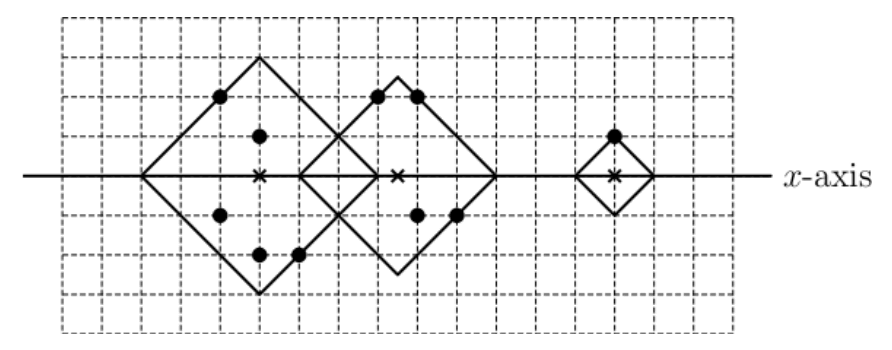
그림 1. 검은 점은 얼룩이고, 십자 표시는 조각의 중심입니다. 굵은 직선은 x축입니다.
이 예시에서는 아홉 개의 얼룩을 세 개의 조각으로 덮으며, 넓이의 합이 가능한 가장 작은 값인 입니다.
모든 얼룩의 좌표는 정수입니다. 다음 세 조건을 모두 만족하는 마름모 조각들의 집합을 찾으세요. (1) 모든 얼룩은 어떤 조각의 내부 또는 경계에 포함되어야 합니다. (2) 모든 조각의 중심은 x축 위에 있어야 합니다. (3) 조각들의 넓이의 합이 최소여야 합니다. 모든 얼룩은 서로 다르며, x축 위에 놓인 얼룩은 없습니다.
입력
첫 줄에 테스트 케이스의 수 가 주어집니다. 각 테스트 케이스의 첫 줄에는 얼룩의 개수 이 주어지며, 입니다. 이어지는 개의 줄에는 각 얼룩의 x좌표와 y좌표를 나타내는 두 정수가 주어지며, 각 좌표는 이상 이하입니다.
출력
각 테스트 케이스마다 모든 얼룩을 덮는 데 필요한 조각들의 최소 넓이의 합을 한 줄에 출력합니다. 소수점 아래 첫째 자리까지 출력하고, 둘째 자리부터는 잘라냅니다(반올림하지 않습니다). 모든 조각의 넓이는 의 배수이므로, 출력되는 소수점 아래 첫째 자리는 항상 또는 입니다.