배달
시간 제한1초메모리 제한128 MB
짐은 0에서 출발해 도로 위 각 소포를 한 번에 하나씩 목적지까지 배달하고 출발점으로 돌아오는 최단 이동 거리를 구합니다.
문제
배달해야 하는 소포가 여러 개 있다. 소포마다 출발 지점과 도착 지점이 따로 정해져 있고, 소포는 모두 같은 규격이다. 배달원 짐은 한 번에 소포를 최대 한 개까지 들 수 있고, 소포를 들고 가는 도중에 그 소포를 내려놓지 않는다. 소포를 모두 배달한 뒤에는 처음 출발한 자리로 돌아와야 한다. 짐은 이동 거리를 최소로 줄이려고 한다.
짐이 일하는 도시는 곧게 뻗은 도로 하나로 이루어져 있다. 도로의 가장 왼쪽 지점이 짐의 출발 지점이고, 각 소포의 출발 지점과 도착 지점도 모두 이 도로 위에 있다. 소포 정보는 짐이 움직이기 전에 모두 주어지며, 소포 하나의 정보는 출발 지점과 도착 지점뿐이다. 배달은 짐이 혼자 한다.

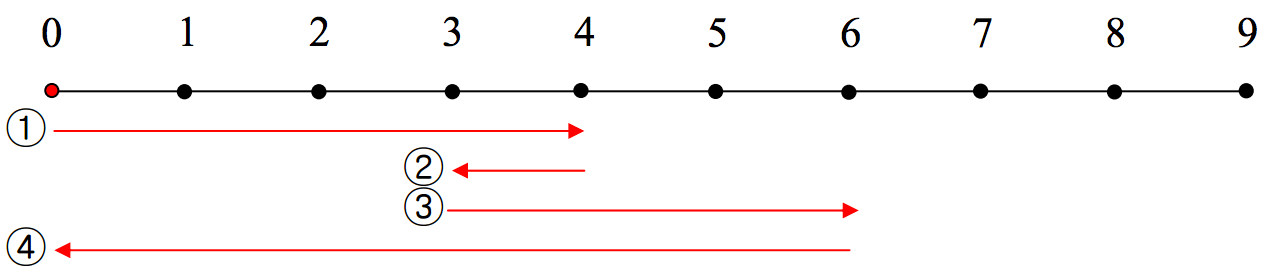
위 그림은 소포가 두 개인 경우이다. 하나는 에서 로, 다른 하나는 에서 으로 배달해야 한다. 은 짐의 출발 지점이고, 나머지 숫자는 에서 그 지점까지의 거리이다. 아래 그림이 최적해를 나타낸다. 짐은 먼저 에 있는 소포를 까지 배달하고, 으로 되돌아가 에 있는 소포를 까지 배달한 다음, 출발 지점 으로 돌아온다. 이때 이동 거리는 이고, 이 경우 이 값이 최솟값이다.
입력
입력은 표준 입력으로 받는다. 첫 줄에 테스트 케이스의 개수 ()가 주어진다.
각 테스트 케이스의 첫 줄에는 소포의 개수 ()가 주어진다. 이어지는 개의 줄에는 소포 하나의 출발 지점 ()와 도착 지점 ()가 한 줄에 하나씩 주어진다.
출력
출력은 표준 출력으로 한다. 각 테스트 케이스마다 짐이 움직이는 최소 거리를 한 줄에 하나씩 출력한다.