전쟁 게임
시간 제한1초메모리 제한128 MB
상대 병사들의 배치가 주어지면 만나는 순서대로 모든 병사를 이기는 가장 짧은 배치를 출력합니다.
문제
길동이는 요즘 컴퓨터 전략 게임에 빠져 있다. 이 게임에서 이기려면 먼저 상대 진형을 알아낸 다음, 거기에 맞는 병사로 자기 진형을 짜야 한다. 병사는 궁수, 창병, 기병 세 종류다. 궁수는 창병을 이기고, 창병은 기병을 이기고, 기병은 궁수를 이긴다. 상대 진형이 주어졌을 때 병사 수가 가장 적은 승리 진형을 구하는 프로그램을 작성하시오.
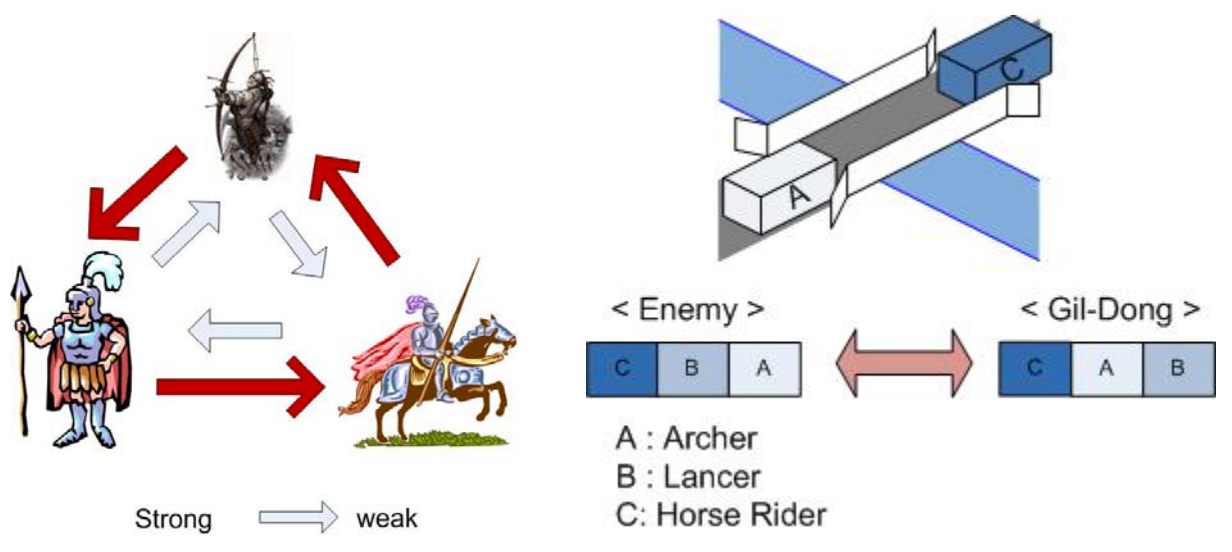
규칙은 다음과 같다.
- 모든 병사는 정면만 공격하고 옆은 공격하지 못한다.
- 그림처럼 길동이의 병사는 오른쪽에서 왼쪽으로, 상대의 병사는 왼쪽에서 오른쪽으로 움직인다.
- 길동이의 병사가 같은 종류의 상대 병사와 맞붙으면 길동이의 병사가 진다. 길동이의 병사는 훈련이 덜 되어 있기 때문이다.
- 한 번 맞붙으면 진 병사만 쓰러진다. 이긴 병사는 자리를 지키고 상대의 다음 병사와 곧바로 다시 맞붙는다.
- 상대 병사가 모두 쓰러지면 길동이가 이긴다.
입력
입력은 표준 입력으로 받는다. 첫째 줄에 테스트 케이스의 개수 ()가 주어진다. 이어지는 개의 줄에는 상대 진형이 A, B, C로만 이루어진 문자열로 한 줄에 하나씩 주어진다. A는 궁수, B는 창병, C는 기병을 뜻한다. 각 문자열의 길이는 80을 넘지 않는다. 주어진 진형의 마지막 병사가 길동이 진형의 첫 병사와 가장 먼저 맞붙는다는 점에 주의하시오.
출력
출력은 표준 출력으로 한다. 각 테스트 케이스마다 길이가 가장 짧은 승리 진형을 한 줄에 출력한다. 진형은 가장 먼저 싸우는 병사부터 차례대로 적는다. 길이가 가장 짧은 승리 진형은 언제나 하나뿐이다.