행운의 빛
시간 제한1초메모리 제한128 MB
점광원이 각 선분으로 x축에 만드는 그림자를 제외하고 남는 밝은 구간 개수를 셉니다.
문제
인 점 에 점광원이 하나 있고, 길이가 0이 아닌 선분이 여러 개 있다. 각 선분은 두 끝점의 좌표로 주어지며, 모든 끝점은 서로 다르다. 선분은 모두 축 위쪽, 즉 인 영역에 있다.
선분은 축에 그림자를 드리운다. 두 선분의 그림자는 전혀 겹치지 않거나, 폭이 0보다 큰 구간에서 겹친다. 한 점에서만 맞닿는 경우는 없다. 그림자가 한 점으로 줄어드는 선분, 즉 광원 쪽을 똑바로 향하는 선분도 없다. 광원의 높이 은 모든 끝점의 좌표보다 1 이상 크므로, 모든 선분은 축 위에 유한한 그림자를 남긴다.
그림자는 축을 어두운 구간과 밝은 구간으로 나눈다. 밝은 구간이 몇 개인지 구하시오. 선분이 하나라도 있으면 밝은 구간은 2개 이상이고, 선분이 없으면 1개다.
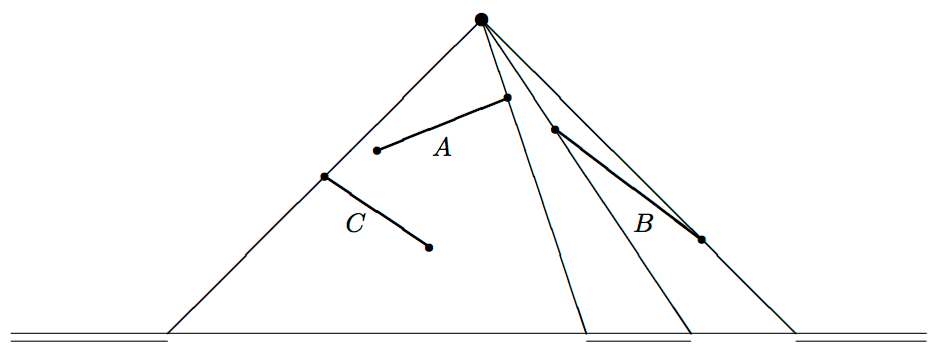
아래 그림에서 선분 A, B, C는 밝은 구간 3개를 만든다.
입력
첫 줄에 테스트 케이스의 개수가 주어진다. 각 테스트 케이스의 형식은 다음과 같다.
- 첫 줄에 선분의 개수 이 주어진다. ()
- 둘째 줄에 광원의 좌표 과 이 공백 하나로 구분되어 주어진다. (, )
- 다음 개 줄에는 번째 선분의 두 끝점 와 를 나타내는 정수 , , , 가 공백 하나로 구분되어 주어진다. (, )
출력
각 테스트 케이스마다 밝은 구간의 개수를 한 줄에 하나씩 출력한다.
힌트
예제 입력 1의 첫 번째 테스트 케이스는 문제 설명의 그림과 같다. 두 번째 테스트 케이스에는 서로 교차하는 선분이 두 개 있다.