버스 노선
시간 제한2초메모리 제한256 MB
N개 정류장 원형 도로 위 시계 방향 구간 중 다른 구간에 완전히 포함되지 않는 구간 번호를 오름차순으로 출력합니다.
문제
국경을 따라 순환 도로를 놓은 나라가 있다. 이 순환 도로에는 정류소가 개 있고, 정류소에는 시계 방향을 따라 번부터 번까지 번호를 붙였다. 지금 이 도로에서 버스 노선 여러 개가 운행 중이다. 각 노선은 로 나타낸다. 이 노선의 버스는 정류소 에서 까지 시계 방향으로 가고, 에서 까지는 반시계 방향으로 온다. 그래서 노선 가 지나는 정류소는 에서 시계 방향으로 세어 에 닿을 때까지 만나는 정류소 전부다. 순환 도로의 정류소를 모두 지나는 노선은 없다.
교통행정부는 비용을 줄이려고 노선 일부를 없애기로 했다. 없애는 노선은 다른 노선에 포함되는 노선이다. 노선 가 지나는 정류소가 모두 노선 가 지나는 정류소이면, 는 에 포함된다.
예를 들어 이고 노선 다섯 개가 차례대로 , , , , 라고 하자.
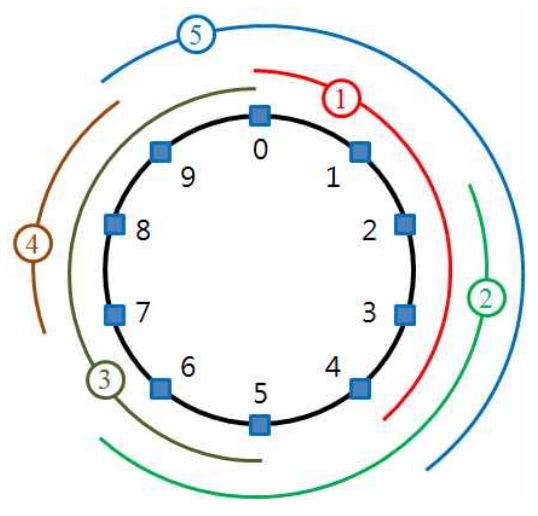
그림에서 1번 노선은 5번 노선에 포함되고, 4번 노선은 3번 노선에 포함된다. 2번, 3번, 5번 노선을 포함하는 노선은 없다. 따라서 없어지는 노선은 1번과 4번이다.
노선 정보가 주어지면 없어지지 않고 계속 운행하는 노선을 모두 출력하는 프로그램을 작성하시오.
입력
첫째 줄에 버스 정류소의 개수 ()이 주어진다. 둘째 줄에 버스 노선의 수 ()이 주어진다. 노선은 번부터 번까지 번호로 구분한다. 다음 개 줄에는 1번 노선부터 차례대로 노선 를 나타내는 두 정수 와 가 한 줄에 하나씩 주어진다. 이고 이며, 같은 노선이 두 번 이상 주어지는 경우는 없다. 순환 도로의 정류소를 모두 지나는 노선도 없다.
출력
다른 어떤 노선에도 포함되지 않는 노선의 번호를 작은 것부터 차례대로 한 줄에 출력한다. 번호 사이는 빈칸 하나로 구분한다.