여왕님의 테라스
시간 제한1초메모리 제한256 MB
원과 원이 맞닿는 조건으로 각 고리 돌의 반지름을 구하고 가장 바깥 고리를 감싸는 볼록 경계의 둘레를 구합니다.
문제
여왕이 테라스 정원을 꾸미려 한다. 정원은 가운데 돌 하나와 그 돌을 감싸는 고리 여러 개로 이루어진다.
- 가운데 돌은 반지름이 인 원이다.
- 각 고리는 크기가 같은 원 모양 돌 개를 둥글게 늘어놓아 만든다. 모든 고리의 돌 개수는 으로 같지만 돌의 크기는 고리마다 달라진다.
- 한 고리 안에서 이웃한 두 돌은 서로 접한다.
- 첫 번째 고리의 돌은 가운데 돌과 접한다.
- 두 번째 고리부터는 각 돌이 바로 안쪽 고리의 돌과 접한다. 바깥 고리는 안쪽 고리보다 반 칸 돌아간 자리에 놓이므로, 바깥 고리의 돌 하나는 안쪽 고리에서 이웃한 두 돌에 동시에 접한다.
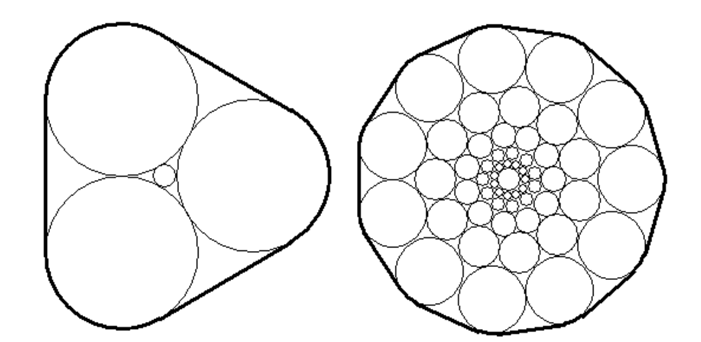
여왕이 아직 과 을 정하지 않아서, 여러 조합에 대해 테라스의 크기를 미리 계산해 두려 한다. 테라스는 가장 바깥 고리의 돌을 모두 감싸는 가장 짧은 볼록한 경계선이다. 이 경계선은 각 돌의 바깥쪽 호와, 이웃한 두 돌의 호 끝을 잇는 선분으로 이루어진다.
고리가 개일 때 마지막 고리를 이루는 돌의 반지름과 테라스의 둘레를 구하라.
입력
첫 줄에 테스트 케이스의 수 가 주어진다. ()
다음 개의 줄에는 각각 테스트 케이스의 번호 , 한 고리를 이루는 돌의 개수 , 고리의 수 이 공백으로 구분되어 주어진다. (, ) 는 정수다.
출력
각 테스트 케이스마다 한 줄에 테스트 케이스의 번호 , 마지막 고리를 이루는 돌의 반지름, 테라스의 둘레를 공백 하나로 구분해 출력한다.
두 실수는 소수점 아래 넷째 자리에서 반올림해 셋째 자리까지 쓴다. 반올림은 를 올리는 방식이고, 값이 정수여도 소수점 아래 세 자리를 모두 쓴다. 출력은 정답과 문자 단위로 같아야 한다.
이 작고 이 클수록 답이 커진다. 반지름은 최대 약 , 둘레는 최대 약 까지 커지므로 배정밀도 실수만으로는 셋째 자리를 맞출 수 없다. 더 높은 정밀도로 계산해야 한다.