창문 뚫기
면접 대비시간 제한8초메모리 제한256 MB
도미노를 자르지 않고 벽 내부에 뚫을 수 있는 가장 큰 정사각형 구멍의 크기와 왼쪽 위 칸을 구합니다.
문제
크기의 정사각형 벽이 크기의 벽돌 개로 빈틈없이 채워져 있다. 은 짝수이다. 벽돌에는 1부터 까지 번호가 붙어 있고, 일부는 가로로, 나머지는 세로로 놓여 있다. 벽에 빈 칸은 없다. 같은 번호가 적힌 두 칸이 벽돌 하나를 이룬다.
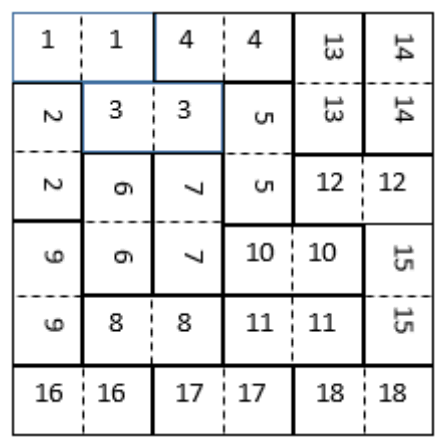
창문을 달려고 벽에 정사각형 구멍을 뚫는다. 구멍은 다음 조건을 모두 만족해야 한다.
- 구멍의 변은 벽의 변과 평행하다.
- 구멍은 벽의 경계에 닿지 않는다. 즉 구멍 전체가 벽 안쪽에 있다.
- 구멍을 뚫으면서 벽돌을 쪼개면 안 된다. 즉 구멍의 경계는 벽돌의 경계 위로만 지나간다.
이 조건을 만족하는 정사각형 구멍 중에서 한 변이 가장 긴 것을 찾는 프로그램을 작성하시오. 그런 구멍이 적어도 하나 있음이 보장된다.
입력
첫째 줄에 벽의 한 변의 길이 이 주어진다. 은 짝수이고 이다.
다음 개 줄에는 각 줄마다 개의 정수가 주어지며, 벽돌 배치를 나타낸다. 각 정수는 1 이상 이하이고, 모든 값은 정확히 두 번씩 나타나며, 값이 같은 두 칸은 서로 맞닿아 있다.
출력
첫째 줄에 정사각형 구멍의 한 변의 길이, 그 구멍의 왼쪽 위 칸의 행 번호와 열 번호를 공백으로 구분해 출력한다. 벽 전체의 왼쪽 위 칸을 로 본다.
한 변이 가장 긴 구멍이 여러 개면 행 번호가 가장 작은 것을 출력하고, 그런 구멍도 여러 개면 그중 열 번호가 가장 작은 것을 출력한다.
힌트
예제에서 뚫을 수 있는 가장 큰 정사각형 구멍의 한 변은 2이다. 6번과 7번 벽돌을 빼도 되고 10번과 11번 벽돌을 빼도 되지만, 행 번호가 더 작은 를 출력한다.