트리 위의 번호
면접 대비시간 제한1초메모리 제한256 MB
높이 H인 완전 이진 트리에서 루트부터 L/R 경로가 가리키는 노드의 번호를 밑에서 위로 오른쪽부터 매긴 규칙에 따라 구합니다.
문제
완전 이진 트리는 맨 위에 뿌리 노드가 하나 있고, 가장 아래 층의 잎을 제외한 모든 노드에는 자식이 정확히 둘 있다. 트리의 높이가 이면 층은 개이고, 뿌리는 깊이 , 잎은 깊이 에 있다.
노드에 번호를 붙이는 규칙은 이렇다. 가장 아래 층의 맨 오른쪽 잎이 번이고, 같은 층에서 오른쪽에서 왼쪽으로 가면서 번호가 씩 커진다. 한 층을 다 붙이면 그 위 층의 맨 오른쪽 노드로 올라가서 다시 오른쪽에서 왼쪽으로 번호를 붙인다. 뿌리에 번호를 붙일 때까지 이 과정을 반복한다.
트리의 노드 하나는 뿌리에서 시작해 아래로 내려가는 경로로 나타낼 수 있다. 잎이 아닌 노드에서는 왼쪽 자식으로 가거나(L) 오른쪽 자식으로 갈 수 있다(R).
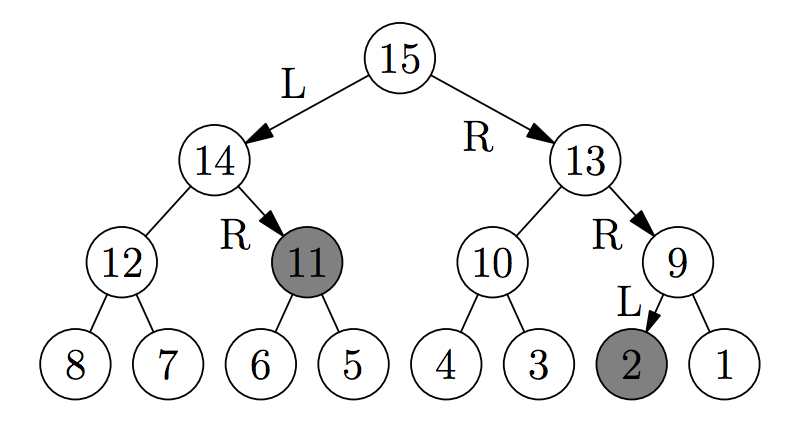
그림: 높이가 인 트리에 번호를 붙인 모습이다. 경로 LR은 번호가 인 노드로, 경로 RRL은 번호가 인 노드로 이어진다. 뿌리의 번호는 이다.
트리의 높이 와 뿌리에서 시작하는 경로가 주어질 때, 그 경로가 가리키는 노드의 번호를 구하라.
입력
첫째 줄에 트리의 높이 와 문자열 하나가 공백으로 구분되어 주어진다 (). 문자열은 L과 R로만 이루어지고, 뿌리에서 시작하는 경로를 나타낸다. L은 왼쪽 자식으로 내려가는 것을, R은 오른쪽 자식으로 내려가는 것을 뜻한다. 경로는 비어 있을 수 있고, 길이는 이하이다. 경로가 비어 있으면 첫째 줄에는 만 주어진다.
출력
경로가 가리키는 노드의 번호를 한 줄에 출력한다.