모래 그림
시간 제한3초메모리 제한256 MB
색깔별 공급량과 구간별 색깔별 상하한 안에서 n개 구간에 모래를 나누어 담아 가장 높은 구간과 가장 낮은 구간의 높이 차이를 최소화합니다.
문제
공예 축제 부스에서 아이들이 모래 그림을 만든다. 보통은 병에 색이 다른 모래를 층층이 채우지만, 올해는 유리 상자를 쓴다.
상자는 정면에서 보면 직사각형이고 두께는 정확히 1이다. 그래서 어떤 영역에 담기는 모래의 부피는 정면에서 본 그 영역의 넓이와 같다. 상자 안에는 세로 칸막이 개가 서 있어서 내부가 개 구역으로 나뉜다. 아래 그림은 칸막이 3개로 4개 구역을 만든 상자다.
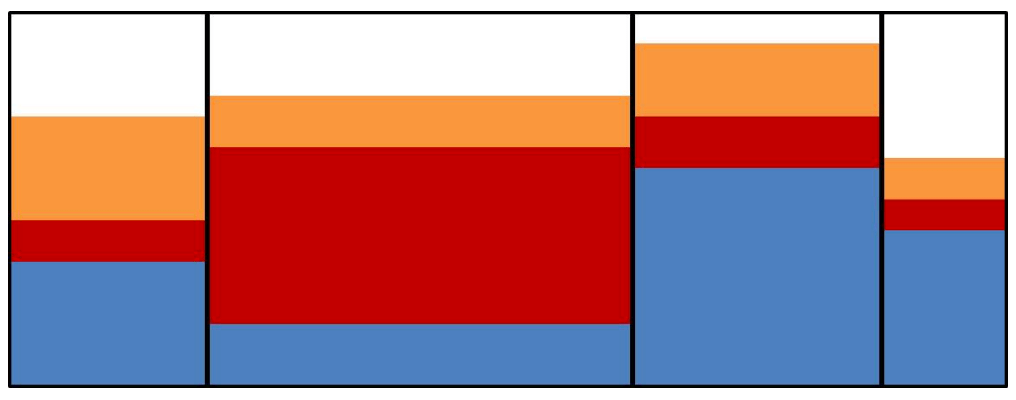
아이들은 구역마다, 색마다 넣을 모래의 최솟값과 최댓값을 정해 준다. 모래는 한 구역 안에서 평평하게 쌓이므로, 구역의 모래 높이는 그 구역에 담긴 모래의 부피를 구역의 폭으로 나눈 값이다. 작품을 최대한 고르게 만들어라. 즉 모래가 가장 높은 구역과 가장 낮은 구역의 높이 차이를 가장 작게 하라.
입력
첫째 줄에 정수 , , , 가 공백으로 구분되어 주어진다.
- ()은 구역의 개수다.
- ()은 모래 색의 개수다.
- 와 ()는 상자의 폭과 높이다. 두께는 항상 1이다.
둘째 줄에 소수점 아래 세 자리까지인 실수 개 ()가 주어진다. 번째 값은 번 색 모래의 부피다. 모래를 전부 쓸 필요는 없지만, 각 구역의 최솟값은 반드시 채워야 한다.
셋째 줄에 소수점 아래 세 자리까지인 실수 개 ()가 증가하는 순서로 주어진다. 각 값은 왼쪽 벽에서 칸막이까지의 거리다.
다음 개 줄에는 각각 소수점 아래 세 자리까지인 실수 개 ()이 주어진다. 번째 줄의 번째 값은 구역 에 넣을 색 모래의 최솟값이다.
그다음 개 줄에는 각각 소수점 아래 세 자리까지인 실수 개 ()가 주어진다. 번째 줄의 번째 값은 구역 에 넣을 색 모래의 최댓값이고, 다.
출력
모래가 가장 높은 구역과 가장 낮은 구역의 높이 차이의 최솟값을 소수점 아래 정확히 세 자리로 반올림해 한 줄에 출력한다. 입력의 조건을 모두 만족하는 분배 방법은 항상 존재한다.