마거릿의 이진 시계 덧셈
시간 제한1초메모리 제한256 MB
두 이진 시계 행렬을 시각으로 바꿔 24시간 기준으로 더한 뒤 같은 행렬 형식으로 출력합니다.
문제
마거릿은 수학을 잘한다. 여가 시간에는 이진 양자 굴절 원리를 시간 여행에 적용해 보고 있다. 하루의 시각을 이진수로 부호화한 뒤 음이 아닌 시간 차이 를 더하면 시공간에 특이점이 생겨 만큼 미래로 건너뛸 수 있다는 것이 마거릿의 생각이다.
시각은 보통 03:14:15처럼 24시간 형식으로 쓴다. 시각을 이진수로 적는 방법은 여러 가지가 있지만, 이 문제에서는 아래 방식만 쓴다.
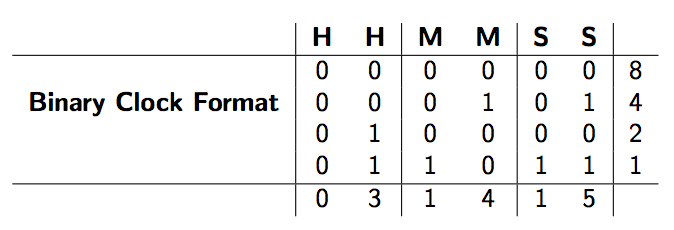
그림 1. 시각 03:14:15을 이진 시계 형식으로 적은 모습.
행렬 하나가 시각 하나를 담는다. 24시간 형식의 십진 숫자 여섯 개를 각각 4비트로 부호화해 한 열에 세로로 적고, 맨 위가 최상위 비트, 맨 아래가 최하위 비트다. 예를 들어 십진수 3은 4비트 이진수로 0011이고, 이다.
이진 시계 형식으로 주어진 시각 와 시간 차이 에서 에 해당하는 시각을 구하라. 결과도 하루 안의 시각이므로 합이 24시간에 이르면 00:00:00부터 이어서 센다.
입력
입력은 8줄이다. 각 줄에는 비트 6개가 공백 하나로 구분되어 놓인다. 처음 4줄은 시각 의 이진 시계 행렬이고, 다음 4줄은 시간 차이 의 행렬이다. 두 행렬 모두 00:00:00부터 23:59:59까지 중 올바른 시각을 나타낸다. 시간은 단순하게 다룬다. 시간대, 윤초, 서머타임 전환은 고려하지 않는다.
출력
에 해당하는 시각을 이진 시계 형식으로 출력한다. 비트 6개를 공백 하나로 구분해 한 줄에 적고, 모두 4줄을 출력한다. 합이 24시간 이상이면 결과가 00:00:00부터 23:59:59 사이에 들어올 때까지 24시간을 뺀다. 마지막 줄 끝에는 줄바꿈을 넣는다.