승진
시간 제한2초메모리 제한256 MB
승격 인원이 A명과 B명일 때 모든 가능한 승격 집합에 포함되는 직원 수와 B명으로도 승격할 수 없는 직원 수를 구합니다.
문제
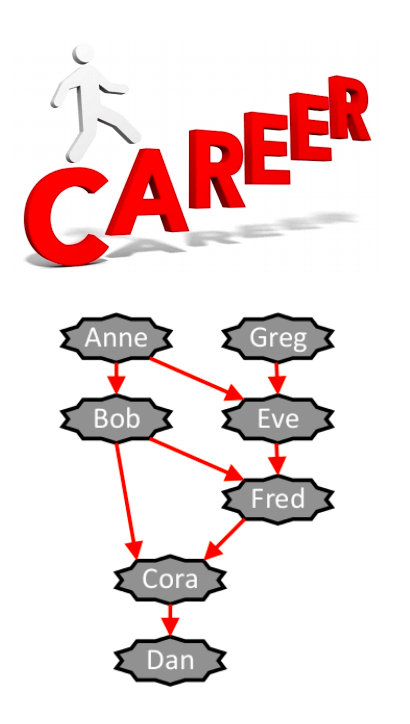
공정 주식회사 경영진은 우수 사원을 승진시키기로 하고, 승진자 수를 구간 안으로 제한했다. 임원진이 사원의 실적을 비교한 결과 사원 사이에 모순 없는 우열 관계가 나왔고, 승진은 이 관계를 지켜야 한다. 즉 사원 가 사원 보다 나은 실적을 냈다면, 가 승진할 때에만 도 승진할 수 있다.
지금까지 모은 자료가 공정성을 보장하기에 충분한지 알아보려고 회장은 다음 두 가지를 묻는다.
- 구간의 양 끝점에서, 곧 승진자가 명일 때와 명일 때 반드시 승진하는 사원은 몇 명인가.
- 승진자가 명이어도 승진할 가능성이 전혀 없는 사원은 몇 명인가.
그림의 예를 보자. 사원은 일곱 명이고 우열 규칙은 여덟 개다. 사원 에서 사원 로 가는 화살표는 가 보다 나은 실적을 냈다는 뜻이다. 승진자 수는 구간 로 제한되어 있다.
- 승진자가 세 명이면 승진자 집합은 Anne, Bob, Greg이거나 Anne, Eve, Greg이다. 그래서 두 명(Anne, Greg)은 반드시 승진한다. 지금 자료로는 Bob과 Eve가 승진할지 알 수 없다.
- 승진자가 네 명이면 승진자 집합은 Anne, Bob, Eve, Greg 하나뿐이다. 그래서 네 명(Anne, Bob, Eve, Greg)이 반드시 승진하고, 세 명(Cora, Dan, Fred)은 승진할 가능성이 없다.
승진자 수의 구간, 사원 집합, 사원 사이의 우열 관계가 주어질 때 구간의 양 끝점 각각에 대해 반드시 승진하는 사원 수를 구하고, 승진할 가능성이 없는 사원 수를 구하는 프로그램을 작성하시오.
우열 관계에는 모순이 없다. 사원 가 사원 보다 나은 실적을 냈다면 는 직접적으로든 간접적으로든 보다 나은 실적을 내지 않았다.
입력
첫째 줄에 네 정수 , , , 가 공백으로 구분되어 주어진다. 와 는 구간의 양 끝점, 는 사원 수, 는 우열 규칙의 개수다. 사원은 부터 까지의 정수로 구분한다. 다음 개의 줄에는 서로 다른 두 정수 와 가 공백으로 구분되어 주어진다. 이는 사원 가 사원 보다 나은 실적을 냈다는 뜻이다.
제한
- (구간의 양 끝점)
- (사원 수)
- (우열 규칙의 개수)
출력
세 줄을 출력한다.
첫째 줄에는 승진자가 명일 때 반드시 승진하는 사원 수를 출력한다. 둘째 줄에는 승진자가 명일 때 반드시 승진하는 사원 수를 출력한다. 셋째 줄에는 승진자가 명이어도 승진할 가능성이 없는 사원 수를 출력한다.