N-오미노 판 채우기 (Small)
시간 제한5초메모리 제한512 MB
X와 R, C가 주어지면 먼저 모양을 고르는 쪽이 보드를 덮을 수 없게 하는 X-오미노를 고를 수 있는지 판정합니다.
문제
N-오미노는 단위 정사각형 개를 변끼리 이어 붙여 만든 평면 도형이다. 1-오미노는 정사각형 하나다. N-오미노는 (N-1)-오미노에 정사각형 하나를 변이 맞닿게 덧붙인 모양이다. 합동인 두 N-오미노는 같은 것으로 본다. 즉 회전하거나 뒤집어서 겹칠 수 있는 모양은 한 가지로 센다.
4-오미노는 다음 다섯 가지다.
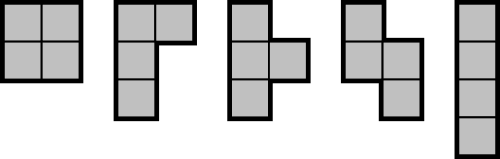
7-오미노는 모두 108가지이고, 아래는 그중 일부다.

철수와 동수는 , , 를 정해 놓고 다음 순서로 게임을 한다.
- 철수가 X-오미노 하나를 고른다.
- 동수는 X-오미노를 여러 개 놓아 판을 빈칸도 겹침도 없이 정확히 채운다. 이때 철수가 고른 X-오미노를 적어도 하나 써야 한다. 종류가 다른 X-오미노를 섞어 써도 되고, 각 조각을 회전하거나 뒤집어서 놓아도 된다.
동수가 이 조건을 지켜 판을 채우면 동수가 이기고, 채우지 못하면 철수가 이긴다. 두 사람 모두 최선을 다한다.
, , 가 주어질 때 어느 쪽이 이기는지 판별하라.
입력
첫째 줄에 테스트케이스의 수 가 주어진다. ()
다음 개의 줄에 각각 , , 가 공백으로 구분되어 주어진다. ()
출력
각 테스트케이스마다 Case #x: y 형식으로 한 줄씩 출력한다. x 는 1부터 시작하는 테스트케이스 번호다.
철수가 고르기만 하면 반드시 이기는 X-오미노가 하나라도 있으면 y 는 RICHARD 이고, 그런 X-오미노가 하나도 없으면 y 는 GABRIEL 이다.
힌트
, , 인 경우 철수가 고를 수 있는 2-오미노는 직사각형 하나뿐이다. 판은 이 직사각형 두 개로 채워지므로 동수가 이긴다.
, , 인 경우에도 철수의 선택지는 직사각형뿐이다. 그런데 칸이 세 개라서 어디에 놓아도 한 칸이 남으므로 철수가 이긴다.
, , 인 경우 철수가 정사각형 모양의 4-오미노를 고르면 폭이 1인 판에는 절대 놓을 수 없으므로 철수가 이긴다.
, , 인 경우 철수는 막대 모양이나 L 모양 중 하나를 골라야 한다. 어느 쪽이든 같은 모양 두 개로 판이 채워지므로 동수가 이긴다.