밀물과 썰물 (작은 입력)
면접 대비시간 제한5초메모리 제한512 MB
수가 초당 10cm씩 내려가고 물이 20cm 이상이면 이동에 1초, 아니면 10초가 드는 지형에서 퇴출 지점에 도달하는 최소 시간을 구합니다.
문제
동굴 수로를 카약으로 지나다가 밀물이 들어와 갇혔다. 다행히 동굴 지도는 있다. 물이 빠지기 시작할 때까지는 나갈 수 없으니, 그동안 출구까지 가장 빨리 가는 방법을 계산해 두려고 한다.
동굴은 격자이다. 지도는 크기의 숫자 격자 두 개로 이루어진다. 하나는 각 칸의 천장 높이이고, 다른 하나는 각 칸의 바닥 높이이다. 동굴 바닥은 물이 스며들기 때문에 수위가 내려가면 수위보다 높은 곳에는 물이 남지 않는다.
시작 위치는 지도의 북서쪽 끝 칸이다. 현재 수위는 센티미터이고, 물이 빠지기 시작하면 초당 10센티미터씩 일정하게 내려가 0이 된다. 출구는 남동쪽 끝 칸이다. 지금은 물에 잠겨 있지만 물이 빠지기 시작하는 순간부터 지나갈 수 있다.
언제든지 인접한 칸으로 북, 남, 동, 서 방향 이동을 할 수 있다. 조건은 다음과 같다.
- 수위, 현재 칸의 바닥 높이, 옮겨 갈 칸의 바닥 높이가 모두 옮겨 갈 칸의 천장 높이보다 50센티미터 이상 낮아야 한다. 따라서 바닥과 천장 사이가 50센티미터 미만인 칸에는 어느 방향에서도 들어갈 수 없다.
- 옮겨 갈 칸의 바닥 높이가 현재 칸의 천장 높이보다도 50센티미터 이상 낮아야 한다.
- 지도 밖으로는 나갈 수 없다.
높낮이는 카약으로 얼마든지 오르내릴 수 있다. 예를 들어 바닥 높이가 10센티미터인 칸에서 바닥 높이가 9000센티미터인 인접한 칸으로 갈 수 있다 (위 조건을 만족한다면).
조건을 그림으로 나타내면 다음과 같다.
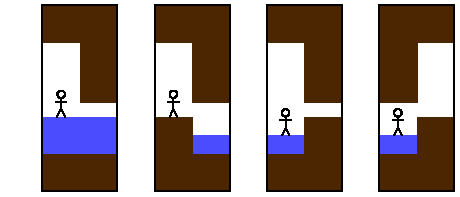
- 첫 번째 그림에서는 수위가 오른쪽 칸의 천장보다 50센티미터 이상 낮지 않아서 오른쪽으로 갈 수 없다.
- 두 번째 그림에서는 현재 칸의 바닥이 오른쪽 칸의 천장보다 50센티미터 이상 낮지 않아서 오른쪽으로 갈 수 없다.
- 세 번째 그림에서는 오른쪽 칸의 바닥이 그 칸 자신의 천장보다 50센티미터 이상 낮지 않아서 오른쪽으로 갈 수 없다. 이 칸에는 어느 방향에서도 들어갈 수 없다.
- 네 번째 그림에서는 오른쪽 칸의 바닥이 현재 칸의 천장보다 50센티미터 이상 낮지 않아서 오른쪽으로 갈 수 없다.
한 칸에서 다른 칸으로 이동을 시작하는 시점에 출발하는 칸에 물이 20센티미터 이상 남아 있으면 이동에 1초가 걸린다 (카약을 탈 수 있다). 그렇지 않으면 카약을 끌어야 해서 10초가 걸린다. 걸리는 시간은 출발하는 칸의 물 깊이로만 정해지고, 들어가는 칸의 물 깊이와는 상관없다.
물이 빠지기 시작할 때까지는 시간이 많이 남아 있어서, 그 전에는 원하는 만큼 이동해도 된다. 구해야 하는 값은 물이 빠지기 시작한 순간부터 출구에 도착할 때까지 걸리는 시간이다.
입력
첫 줄에 테스트 케이스의 개수 가 주어진다.
이어서 개의 테스트 케이스가 주어진다. 각 테스트 케이스의 첫 줄에는 초기 수위 와 지도의 크기 , 이 주어진다. 높이의 단위는 센티미터이다. 그 다음 개의 줄에 천장 높이와 바닥 높이가 다음 형식으로 주어진다.
- 다음 개의 줄에는 각각 개의 정수가 공백으로 구분되어 주어진다. 번째 줄의 번째 정수는 행 열 칸의 천장 높이 이다. 행 번호는 남쪽으로 갈수록 커지고, 열 번호는 동쪽으로 갈수록 커진다.
- 그 다음 개의 줄에는 같은 형식으로 바닥 높이 가 주어진다.
시작 칸은 천장과 초기 수위 사이가 항상 50센티미터 이상이고, 천장과 바닥 사이도 항상 50센티미터 이상이다.
출구 칸도 천장과 바닥 사이가 항상 50센티미터 이상이다.
빠져나가는 방법은 항상 존재한다.
제한
출력
각 테스트 케이스마다 Case #x: t 형식으로 한 줄씩 출력한다. 는 1부터 시작하는 테스트 케이스 번호이고, 는 물이 빠지기 시작한 순간부터 동굴을 빠져나오는 데 걸리는 시간이다. 시간의 단위는 초이다.
는 항상 0.1초의 배수이므로, 소수점 아래 첫째 자리까지 정확히 한 자리만 출력한다. 예를 들어 3초는 3.0으로, 11.7초는 11.7로 쓴다.
힌트
물이 빠지기 전에 동굴 전체를 지나갈 수도 있다. 이때는 출구에서 물이 빠지기를 기다리면 되므로 답이 0이다. 예제의 네 번째 케이스가 이 경우이다.
첫 번째 예제 케이스에서는 처음에 수위와 동쪽 칸 천장 사이가 33센티미터뿐이라서, 물이 빠지기 시작한 뒤 1.7초를 기다려야 그 칸에 들어갈 수 있다. 들어갈 수 있게 된 시점에는 서쪽 칸의 수위가 바닥보다 3센티미터밖에 높지 않아서, 출구까지 카약을 끌고 가는 데 10초가 걸린다.
두 번째 케이스는 시작 상황이 더 낫다. 인접한 칸의 천장이 충분히 높아서 물이 빠지기 전에 예를 들어 2행 2열 칸까지 갈 수 있다. 거기서 수위가 90센티미터로 내려갈 때까지 1초를 기다린 뒤 남쪽으로, 다시 동쪽으로 움직이면 3초 만에 빠져나온다. 2행 3열 칸은 천장이 높지만 그 칸의 바닥과 그리로 들어갈 수 있는 칸(2행 2열, 1행 3열)의 천장 사이가 각각 10센티미터뿐이라서 지나갈 수 없다.
세 번째 케이스는 첫 번째와 비슷하다. 수위가 50센티미터가 될 때까지 시작 칸에서 기다린 다음 출구 쪽으로 카약을 저어 간다. 세 번 움직여 3초가 지나면 수위가 20센티미터가 되는데, 바닥보다 10센티미터 높을 뿐이라서 네 번째 이동은 카약을 끌고 가야 한다.
네 번째 케이스에서는 물이 빠지기 전에 곧바로 출구까지 가서 기다릴 수 있다.