Hook or Be Hooked

Each polygon has a squared radius equal to its farthest vertex from the origin; find the K-th smallest such value and print it with two decimals.

Medium4GeometrySortingMathImplementationNo attempts yetTime limit1sMemory limit512 MB

Problem

Judding loves fishing but has grown bored with the ordinary kind, so he proposed a new style called veteran fishing to the members of his club: fishing takes place at a small lake or pond instead of a wide riverbank or seashore. Each angler stays fixed at one spot on land and catches fish living in the nearby water with a long rod. A rod that casts farther is better, so a better rod always helps.

Let the farthest reachable casting distance be the fishing distance, denoted RR. A fishing ground is called a valid ground when its whole polygon lies inside the circle centered at Judding's seat Z=(0,0)Z = (0, 0) with radius RR. Computing d=x2+y2d = x^2 + y^2 for every vertex shows that a ground is valid exactly when the largest of those values is at most R2R^2.

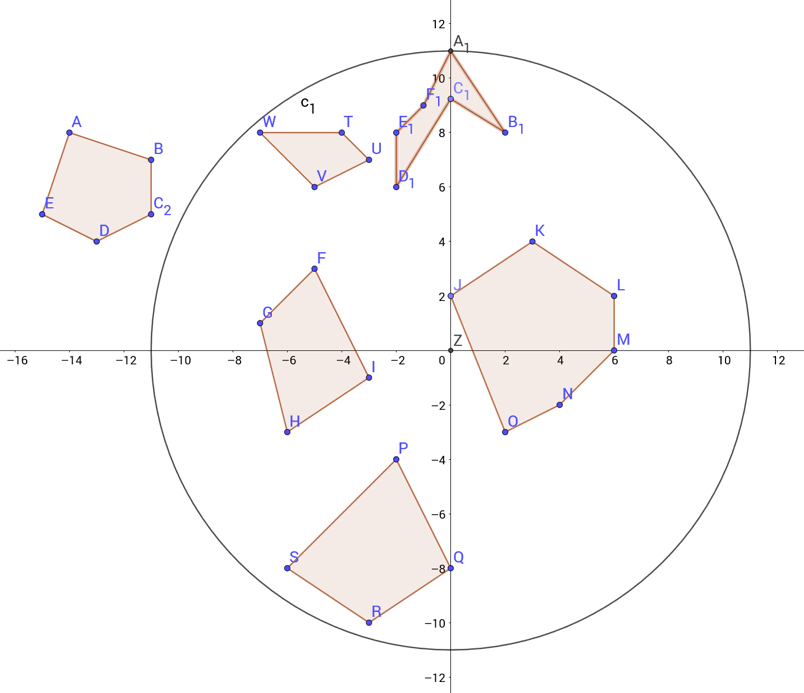
Figure 1. A layout with N=6N = 6 and K=5K = 5.

Judding has a limited budget, so he wants to upgrade his rod only up to the point where at least KK valid grounds are secured from his seat. In the figure above, a fishing distance of 1111 or more secures five valid grounds, so the economical choice is the smallest such value, 1111.

Given the polygonal outlines of all fishing grounds, compute the smallest fishing distance that secures at least KK valid grounds.

Input

The first line contains the number of fishing grounds NN and the required minimum number of valid grounds KK, separated by a space. 1N,K1000001 \le N, K \le 100000 and KNK \le N. Then the descriptions of the NN grounds follow in order. Each ground is described in two lines.

  • The first line contains the number of vertices PiP_i of the polygon.
  • The second line contains the vertex coordinates as integers in the order xx yy, separated by spaces. The vertices are given in clockwise or counterclockwise order starting from the first point.
  • Distinct grounds never overlap, and every polygon has positive area and does not intersect itself.

Output

Let RR be the smallest fishing distance that secures at least KK valid grounds. Print the value of R2R^2, rounded to two digits after the decimal point (rounding half up at the third digit).

Hint

The third sample uses the same layout as the figure in the statement.