균형 잡힌 네트워크의 구조
시간 제한5초메모리 제한16 MB
모든 삼인조가 균형을 이루는 완전 부호 그래프가 주어질 때, 두 노드 사이 간선의 부호를 묻는 질의에 답한다.
문제
Structure of Balanced Networks란 Complete Signed Graph(모든 노드 사이에 간선이 존재하고, 각 간선에 부호가 부여된 그래프)에서 모든 ① triad가 ② balance된 상태를 뜻한다. 여기서 각 용어의 정의는 다음과 같다.
- triad : 그래프 상의 임의의 노드 3개를 선택했을 때 형성되는 삼각형
- balance : 아래의 그림 중 (a), (c)의 상태
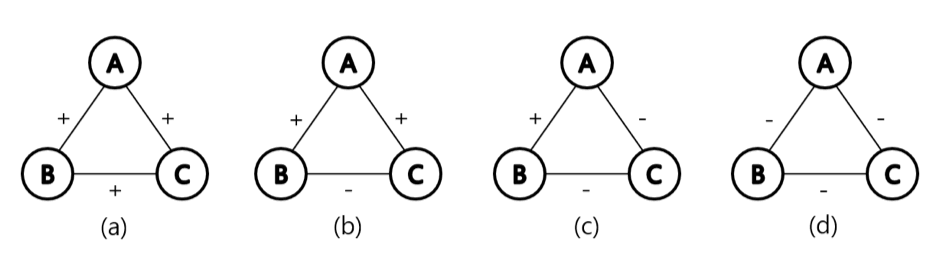
- 모든 관계가 +이므로 전부 친구 관계가 되어 balance 상태
- B와 C가 A라는 공동의 친구를 가지고 있는 상태, 이 경우 A가 B와 C를 화해시키거나(상태 (a)로 바뀜) B와 C가 서로 A와의 관계를 이간질 시킴(상태 (c)로 바뀜)
- A와 B가 C라는 공동의 적을 가지고 있어서 balance 상태
- 관계가 -이지만, 세 사람 중에 제일 싫어하는 사람을 상대하기 위해 임시적 동맹을 맺음(상태 (c)로 바뀜)
다음은 balance된 예시와, balance하지 않은 예시이다.
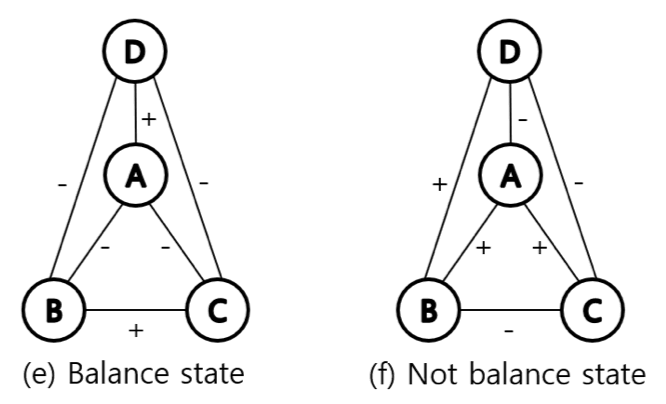
일방적인 관계는 없다. 즉, A와 B의 관계는 B와 A의 관계이다.
Structure of Balanced Networks와 임의의 두 노드 B, C가 여러 번 주어졌을 때, 각각의 B와 C의 관계의 부호를 출력하는 프로그램을 작성하시오.
입력
첫 번째 줄에 노드의 개수 n(3 ≤ n ≤ 5000)가 주어진다.
둘째 줄부터 n줄 동안 각 줄마다 n개의 노드의 관계가 주어진다. i+1번째 줄의 j번째 문자가 '+'일 경우 친구, '-'일 경우 적, '0'은 자기 자신을 뜻한다.
그 다음 줄에는 질의의 개수 m(1 ≤ m ≤ 100)이 주어진다.
다음 m줄 동안 노드 B의 번호 b(0 ≤ b < n), 노드 C의 번호 c(0 ≤ c < n)가 주어진다.
각 노드는 0부터 n-1까지의 수로 표현되고 B, C는 서로 다른 노드 번호로 주어진다.
출력
m줄동안 B와 C의 관계를 출력한다.