Get Many Persimmon Trees
InterviewTime limit2sMemory limit512 MB
Given tree coordinates in a W by H grid and a fixed S by T window, find the window placement containing the most trees.
- Level
Medium4 of 10
- Topics
- Prefix sum, Array, Brute force, Implementation
- Solved
- No attempts yet
Problem
Seiji Hayashi had been a professor at the Nisshinkan Samurai School in the domain of Aizu for a long time in the 18th century. To reward him for his meritorious career in education, Katanobu Matsudaira, the lord of the domain of Aizu, decided to grant him a rectangular estate within a large field in the Aizu Basin. Although the size (width and height) of the estate was strictly specified by the lord, Hayashi could choose any location for the estate in the field.
The field, which also had a rectangular shape, held many Japanese persimmon trees. The fruit of these trees was one of the famous products of the Aizu region, known as 'Mishirazu Persimmon'. Persimmon was Hayashi's favorite fruit, so he wanted the estate given by the lord to contain as many persimmon trees as possible.
For example, in Figure 1 the entire field is a rectangular grid whose width and height are 10 and 8. Each asterisk (*) marks a place with a persimmon tree. If the specified width and height of the estate are 4 and 3, the area surrounded by the solid line contains the most persimmon trees. Similarly, if the estate's width is 6 and its height is 4, the area surrounded by the dashed line has the most, and if the estate's width and height are 3 and 4, the area surrounded by the dotted line contains the most persimmon trees. The width and height cannot be swapped; the sizes 4 by 3 and 3 by 4 are different, as shown in Figure 1.
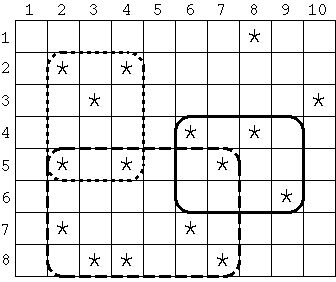
Figure 1: Examples of Rectangular Estates
Your task is to find the estate of a given size (width and height) that contains the largest number of persimmon trees.
Input
The input consists of multiple data sets. Each data set is given in the following format.
N
W H
x1 y1
x2 y2
...
xN yN
S T
N is the number of persimmon trees, a positive integer less than 500. W and H are the width and the height of the entire field. You can assume that both W and H are positive integers whose values are less than 100. For each i (1 <= i <= N), x**i and y**i are the coordinates of the i-th persimmon tree in the grid. The origin of each coordinate is 1. You can assume that 1 <= x**i <= W and 1 <= y**i <= H, and no two trees have the same positions. But you should not assume that the persimmon trees are sorted in some order according to their positions. Lastly, S and T are positive integers giving the width and height of the estate granted by the lord. You can also assume that 1 <= S <= W and 1 <= T <= H.
The end of the input is indicated by a line that solely contains a zero.
Output
For each data set, print one line containing the maximum possible number of persimmon trees that can be included in an estate of the given size.