Unstable Sequence
InterviewTime limit1.5sMemory limit1024 MB
Pick the most numbers in their original order so that every two adjacent picked numbers have an odd sum, meaning their parities alternate.
Problem
natural numbers are lined up from left to right. The -th number from the left () is .
You may pick any number of these numbers. You cannot pick none, so you must pick at least one.
Let be the number of picked numbers, and let the picked numbers be in order. They keep the order they had in the original row.
For example, take and . If you pick the 2nd, 4th, and 5th numbers from the left, then and .
Call an unstable sequence if the sum of every pair of adjacent numbers is odd: the sum of and , the sum of and , and so on. If , then counts as an unstable sequence.
For example, if and , then the adjacent sums are 5, 7, 5, 7, and 9. All are odd, so is an unstable sequence.
Also, if and , then is an unstable sequence because .
But if and , the first adjacent sum is 9 (odd), but the sum of 5 and 1 is 6 (even). Some adjacent sums are not odd, so is not an unstable sequence.
You must pick numbers so that is an unstable sequence, and you want to pick as many numbers as possible. Write a program that finds the maximum number of numbers you can pick.
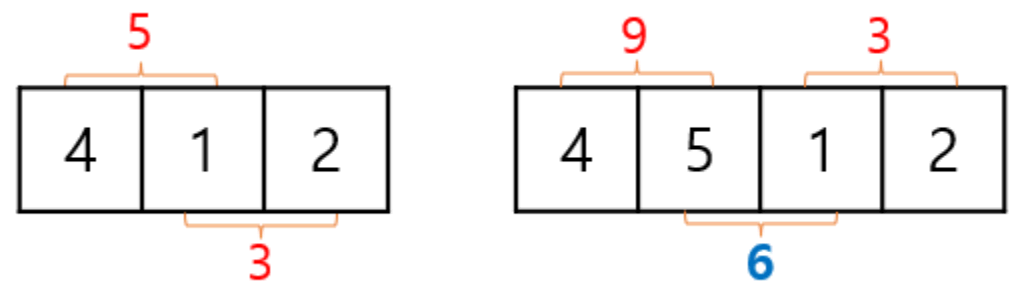
For example, take . Picking all four numbers gives , which is not an unstable sequence, so four numbers are not possible. Picking the 1st, 3rd, and 4th numbers gives . The sums 4 + 1 = 5 and 1 + 2 = 3 are both odd, so is an unstable sequence. Three is the maximum.
Input
The first line contains .
The second line contains in order, separated by spaces.
Output
Print the answer on the first line.
Constraints
- Every given number is a natural number.
- ()