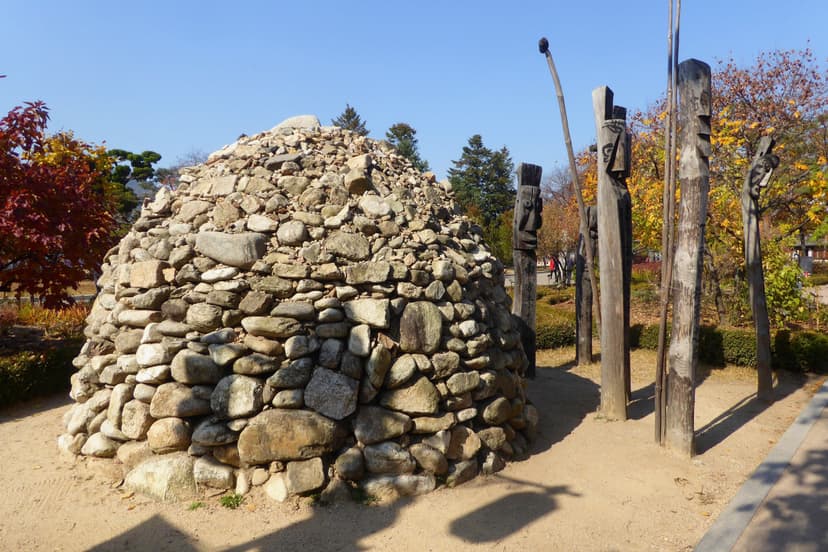
서낭당은 한민족의 문화 건축물로 마을의 수호신인 서낭신을 모신 신단이나 나무이다. 성황당이라고도 한다.
서낭당은 한국의 산간 마을에 흔히 볼 수 있으며, 마을의 안녕과 평안을 위해 제사를 드리는 곳이다.
서낭당은 정해진 모양이 없으며, 돌이나 오색 천 등으로 장식되기도 한다.
서낭당은 마을의 입구나 경계에 위치하며, 마을의 주신인 당산과는 다르게 하위신이다.
고려 문종 때 신성진에 성황사를 둔 것이 서낭의 시초라 한다.
서낭당 돌무더기나 오방천이 걸쳐져 있는 당산나무(서낭나무) 만 있는 경우도 있다.
서낭당은 농어촌 어디에서나 쉽게 찾아볼 수 있는 민간신앙의 상징이었지만, 지난 20~30년 사이에 그 자취를 감추었다.
서낭당이 자취를 감춘 이유는 명확하게 밝혀진 것은 없지만, 여러 가지 요인이 작용했을 것으로 추측된다.
연구자들은 서낭당이 한국의 산신신앙과 천신신앙에서 그 뿌리를 찾기도 한다고 하며, 현대화와 문화적 단절, 민속신앙의 소외 등이 서낭당의 잊혀짐에 영향을 미쳤다고 주장한다.
서낭당은 한민족의 문화 건축물로 마을의 수호신인 서낭신을 모신 신단이나 나무이다. 성황당이라고도 한다.
서낭당은 한국의 산간 마을에 흔히 볼 수 있으며, 마을의 안녕과 평안을 위해 제사를 드리는 곳이다.
서낭당은 정해진 모양이 없으며, 돌이나 오색 천 등으로 장식되기도 한다.
서낭당은 마을의 입구나 경계에 위치하며, 마을의 주신인 당산과는 다르게 하위신이다.
고려 문종 때 신성진에 성황사를 둔 것이 서낭의 시초라 한다.
서낭당 돌무더기나 오방천이 걸쳐져 있는 당산나무(서낭나무) 만 있는 경우도 있다.
서낭당은 농어촌 어디에서나 쉽게 찾아볼 수 있는 민간신앙의 상징이었지만, 지난 20~30년 사이에 그 자취를 감추었다.
서낭당이 자취를 감춘 이유는 명확하게 밝혀진 것은 없지만, 여러 가지 요인이 작용했을 것으로 추측된다.
연구자들은 서낭당이 한국의 산신신앙과 천신신앙에서 그 뿌리를 찾기도 한다고 하며, 현대화와 문화적 단절, 민속신앙의 소외 등이 서낭당의 잊혀짐에 영향을 미쳤다고 주장한다.
Use each mode-specific prompt together with the common element block.
Auto Refactor
Prompt
STOP! Re-read all code. Would Karpathy approve every line? Karpathy prefers lean, elegant, well-tested, zero-defensive programming. Use MCPs and web searches.
STOP! Re-read all code, assess PR comments. Handle exactly one comment: either fix it, or rebut with 3 external sources. Fix any dirt found along the way. Lean, elegant, zero defensive programming.
STOP! Re-read all code, assess GitHub Issues. Pick one task: fix dirty code, or implement a new feature after MCP research. Lean, elegant, zero defensive programming.
Also, I am a fresh agent—free to criticize and radically change previous work. Karpathy's philosophy: delete and simplify. Code is liability; prefer well-maintained libraries over custom code. UI libraries: optimize, don't delete. Re-read all the sources from zero. Use MCPs and web searches—traditional knowledge is stale. Commit and push at the loop end. Any edit means I need a fresh iteration. SWOT analysis first, then work.
Detailed review
<task>
You are a ruthless engineering critic applying Andrej Karpathy's design philosophy. Read the architecture plan at PLAN LINK.

Karpathy's core principles:
- Code is liability. Every line you write is a line you must maintain.
- Delete and simplify. If something can be removed without breaking the system, remove it.
- Prefer well-maintained libraries over custom code.
- Zero-defensive design. Don't code for hypotheticals that haven't happened yet.
- Start with the simplest thing that works. Add complexity only when forced by reality.
- "Demo is works.any(), product is works.all()" -- but V1 is closer to demo than product.
- Overfit a single batch before scaling up.

Apply these principles to the plan. For each section, ask:
1. Is this needed for V1, or is it speculative engineering?
2. Can this be deleted or simplified without losing core value?
3. Is this solving a problem we actually have, or a problem we might have?
4. Would a 10x engineer look at this and say "too much"?

Be brutal. Identify:
- **OVER-ENGINEERING**: Things designed for scale/problems that don't exist yet
- **UNNECESSARY COMPLEXITY**: Things that add cognitive load without proportional value
- **PREMATURE ABSTRACTIONS**: Separations that aren't justified at V1 scale
- **DELETE CANDIDATES**: Sections, tables, fields, or features that should be cut from V1

This is a V1 product being built by a small team. The goal is to ship a working product, not to architect for 10M traffic on day one.

Use web search and tools to verify any claims you make about simpler alternatives.
</task>

<structured_output_contract>
Return findings in these sections:
1. VERDICT: Would Karpathy approve? One line.
2. DELETE: Things to remove entirely
3. SIMPLIFY: Things to keep but make simpler
4. KEEP: Things that are correctly lean
5. THE LEAN V1: What the plan SHOULD look like if you strip it to essentials
</structured_output_contract>

<grounding_rules>
- Be specific. Don't say "simplify the schema" -- say which fields to cut.
- Every DELETE must justify what you lose and why it's acceptable for V1.
- Every KEEP must justify why it's essential, not just nice-to-have.
- Think from the perspective of "what do I need to ship in 2 weeks?"
</grounding_rules>