 cho.sh
Chiaki Chain Counting
아직 제출이 없습니다시간 제한1.5초메모리 제한256 MB문제
An ordinary chain is a graph consisting of sequential (at least two) vertices. Every two adjacent vertices are connected by an edge. The -th order Chiaki Chain looks slightly different from a chain. There are sub-chains of various lengths extended from different vertices on the main chain. At the other side of each sub-chain, there is a simple cycle of length respectively. There is no useless vertices or edges on the -th order Chiaki Chain.
Note that the main chain and the sub-chains should consist of at least two vertices.
The following image corresponds to the a -rd order Chiaki Chain with vertices and edges:
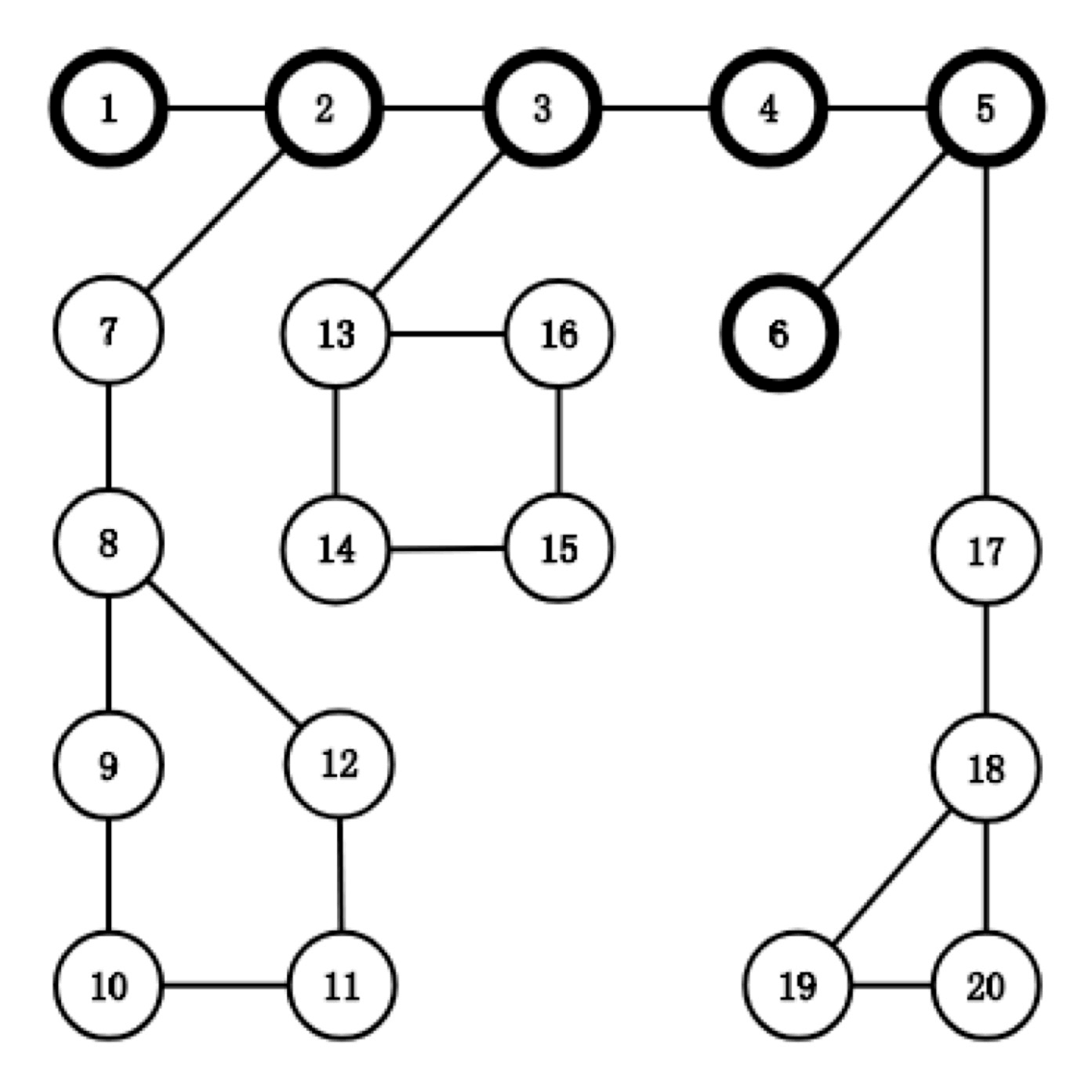
Given , and , Chiaki would like to know the number of labelled -th order Chiaki Chain with vertices and edges. Since this number may be very large, you are only asked to calculate it modulo .
입력
There are multiple test cases. The first line of the input contains an integer (), indicating the number of test cases. For each test case:
The first line contains three integers , and () --- the number of vertices and the number of edges in the graph and the order of Chiaki Chain.
출력
For each test case, output an integer denoting the answer.