도박 게임
시간 제한1초메모리 제한1024 MB
1부터 m까지의 공을 순서대로 비복원 추출할 때, 서로 겹치지 않는 n개의 쌍을 모두 p번째 추출에서 정확히 덮을 확률을 기약분수로 계산한다.
문제
이오니아 현금 조달 위원회가 정부 재원을 마련하기 위해 새로운 도박 게임을 만들었다. 게임은 다음과 같이 진행된다. 매주 정부는 개의 공(번호 )을 하나씩 중복 없이 뽑는 과정을 텔레비전으로 방송한다. 게임에 참여하려면 게임 카드를 사야 한다. 각 카드에는 개의 칸이 있고(), 각 칸에는 1과 사이의 두 수가 적혀 있다. 어떤 수든 카드에 두 번 이상 나타나지 않는다. 예시 카드를 그림 E.1에 나타내었다.
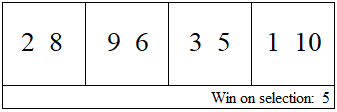
그림 E.1: , , 인 예시 게임 카드.
공이 하나 뽑힐 때마다 참가자는 그 수가 적힌 칸을 덮는다(카드에서 그런 칸은 최대 하나이다). 각 게임 카드에는 수 도 인쇄되어 있으며, 정확히 번째 공이 뽑힌 뒤에 개의 칸을 모두 덮으면 승리한다(즉, 번째 공이 뽑히기 전에는 개의 칸만 덮은 상태였다). 정부는 시민에게 카드를 발급하기 전에 여러 값에 대한 당첨 확률을 파악해 상금을 적절히 정하려 한다. 정부는 이 문제를 해결하는 프로그램을 작성하도록 당신을 고용했다.
입력
입력은 위에서 설명한 세 정수 를 담은 한 줄로 이루어진다. 여기서 , , 이다.
출력
번째 공이 뽑힐 때 승리할 확률을 기약분수 x/y 형태로 출력한다.